Arm Fat Treatments Compared: Exercise, Injections, Liposuction, Lift
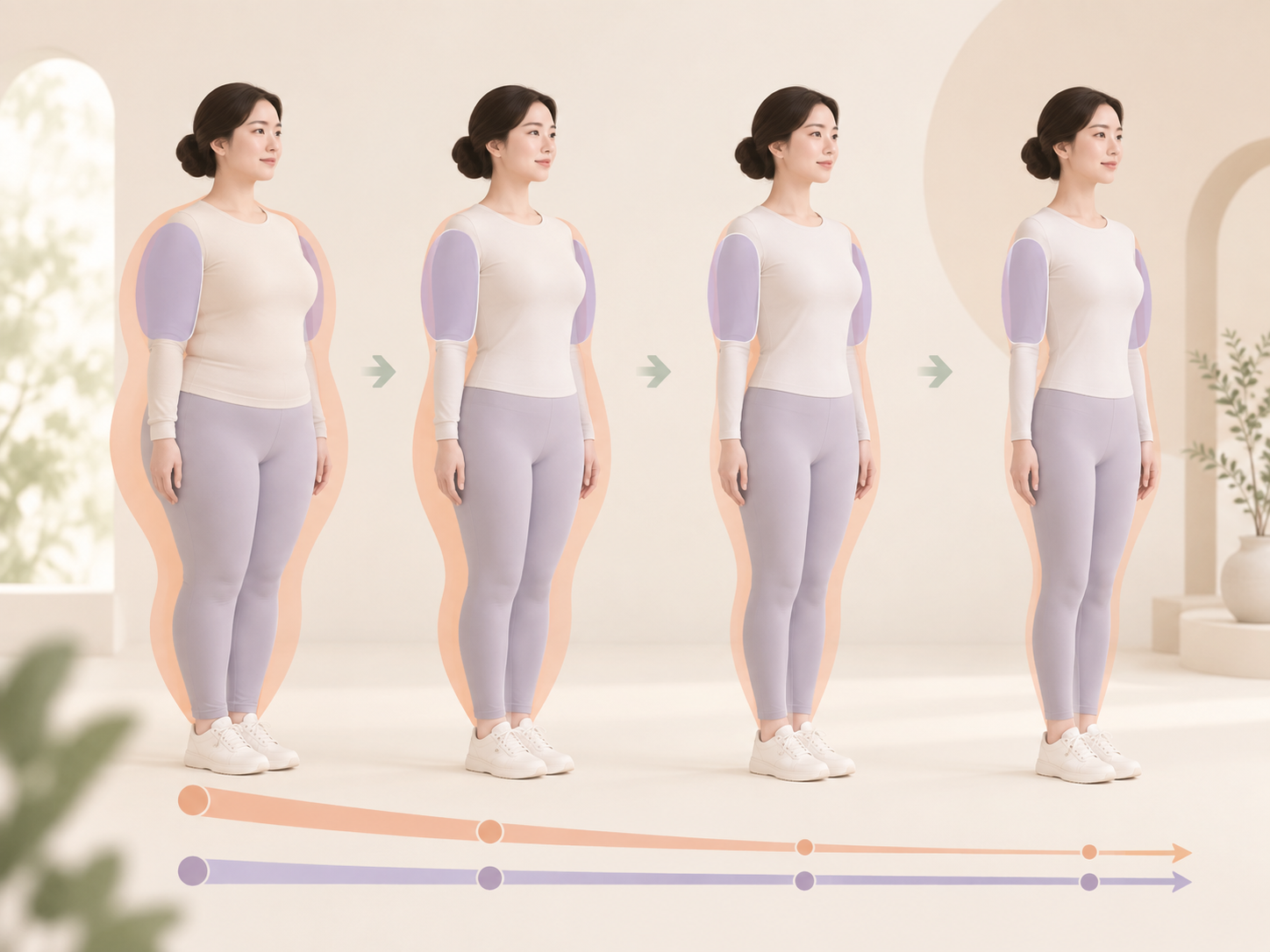
Search for arm fat treatments and the names never end. Fat dissolving injections, fat extraction injections, radiofrequency devices, liposuction, arm lifts. Ask which one is good and you get an explanation of each, yet which one suits your arm is still left open.
That is because the order is inverted. Choosing a method first and fitting your arm to it goes wrong. What remains on your arm comes first, and the method follows from there.
Arm treatments are divided by what they target
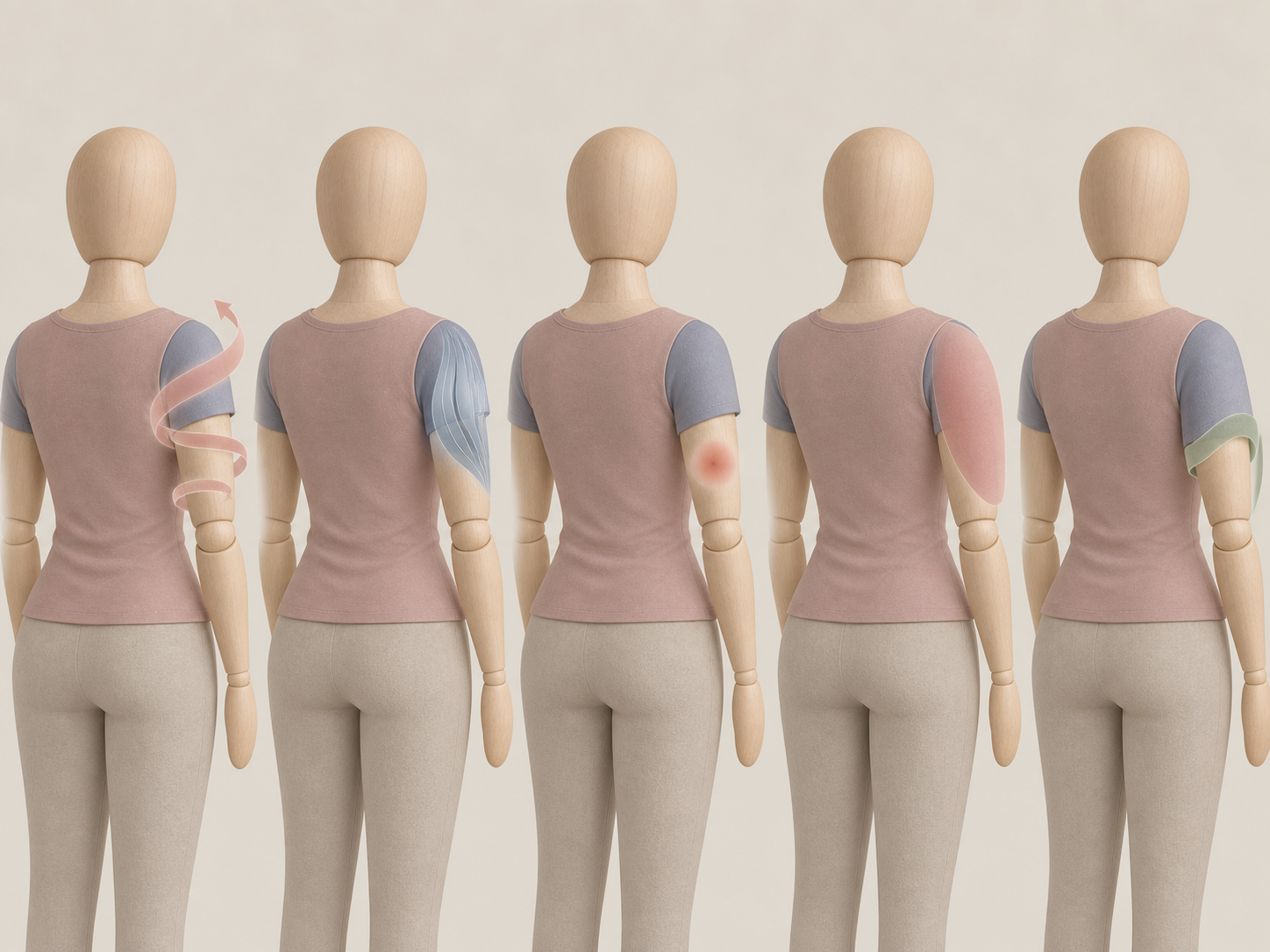
The names are many, but grouped by how they act they come down to four: building muscle to support the area, dissolving or drawing out fat, removing fat directly, and reducing excess skin.
What separates the four is what they take as their target. Exercise acts on muscle, injections and liposuction on fat, a lift on skin. Because the targets differ, so do the conditions each works on. Exercise alone on an arm whose problem is fat yields a small margin, and removing more fat from an arm where skin remains is counterproductive.
| Method | Works well on | Does not work on | Time required |
|---|---|---|---|
| Exercise | Arms with low muscle mass and overall softness | Arms with fat concentrated in one area | Several months or more; must be maintained |
| Fat dissolving injection | Arms with a thin layer of fat near the surface | Arms with a thick fat layer | Several weeks across multiple sessions |
| Fat extraction injection | Arms with a small area and a modest amount | Cases aiming to change the whole arm line | Short recovery; multiple sessions assumed |
| Liposuction | Arms with a thick fat layer and supporting elasticity | Arms without enough fat to remove | 3 to 6 months to final assessment |
| Arm lift | Arms where excess skin, not fat, is what remains | Arms without much skin laxity | 6 months or more for the scar to settle |
Read the table across, not down. It is a table for finding which row’s “works well on” describes your arm. Falling across several rows is common, and when that happens, sequence becomes the question.
Arms exercise works on, and arms it does not
Let us place exercise accurately first. It is not true that exercise is useless.
Building the triceps makes the layer covering it sit a little more firmly. When overall body fat drops, the arm gives up a share of it too. The problem is that choosing one specific area to reduce is not something exercise can do. Fat decreases evenly across the body, and which area goes first is set individually.
That is how you end up with a lower weight and the same arm: your arm sits later in the order. To solve it with more exercise you would have to drive whole-body fat far lower, and along the way the face or the chest gives way first, bringing changes you did not want before the one you did. What to review before surgery is set out on the Pre-Surgery Examination page.
How far can injections go?
What injection-based methods can address stops at fat lying thinly in the shallow layer. They go by various names, but they share a shallow depth of action.
They divide broadly into two. One breaks down fat cells with a drug and clears them through metabolism; the other draws fat out directly through a fine cannula. The first involves less swelling and pain but needs several sessions; the second removes more per session but brings bruising and swelling with it.
What both share is that they assume multiple sessions. So you should work out the total number of sessions and the total duration in advance. It is not unusual in consultation to meet people who tried it once or twice, found it wanting, and moved to liposuction — and by then the time already spent sits inside the recovery schedule. Checking the current state of your layers before adding more repeat treatments reduces the choices you did not need to make.
Choosing injections for an arm with a thick fat layer produces little perceptible change no matter how many sessions you add, because only the shallow layer is being touched. Conversely, on an arm where fat lies thinly, liposuction may be excessive. It is not a question of which is better, but of where your fat layer sits.
Arms that should be assessed for liposuction
If the fat layer is thick and skin elasticity supports it, you are in the range where liposuction fits. What separates liposuction from the other methods here is that it addresses the whole layer at once.
Trouble begins when removing a lot becomes the goal. Fat is not only something to be removed; it is also the layer that supports the surface from beneath the skin, so a certain amount must remain for the line to run smoothly. Unlike the abdomen, the arm has a thin fat layer and thin skin, so there is little margin. That is why we decide the thickness to leave before the amount to remove.
We assess the area too. Addressing the arm alone while leaving the front of the armpit or the rear running into the bra line can create a visible border between the two zones that was not there before. Shoulder to elbow is a single line. How far to extend the area is laid out by region on the Arm Liposuction page.
If skin is what remains, the sequence changes
If it comes up thin when pinched yet sways when you raise the arm, what remains is not fat but skin. This condition appears often after a large weight loss.
Removing more fat here takes away the volume that was holding things up, and the leftover skin is exposed as it is. You may end up thinner but with the sag more noticeable when the arm is raised. How to tell whether fat or skin is what remains is covered on the Arm Liposuction page.
Where skin laxity is substantial, a lift that reduces it by excision enters the picture. In exchange, a long scar remains along the inner arm and the recovery burden differs. It is not a procedure performed at Line Culture Clinic, but which condition you are in is something a consultation can determine. If you are right after a weight loss, it is better to postpone the judgment. That is the period when the arm looks loosest, which leads you to overstate the skin problem.
Four things that show where your arm falls
Work through these at home in order and the direction narrows.
| Order | What to look at | What it points to |
|---|---|---|
| 1 | Amount of fat | Thick when pinched means injections or liposuction |
| 2 | Muscle component | A sharp drop when flexed points to muscle |
| 3 | Skin elasticity | A lingering mark after release means reduced elasticity |
| 4 | Area to assess | The back only, or out to the outer arm and armpit |
When the four converge in one direction, the method narrows to one as well. When they scatter, it is usually a mixed type, and then deciding what to leave before deciding what to gain makes the result easier to accept. The fourth item is easy to skip, yet for the same amount of fat, the plan differs depending on whether you assess the back alone or extend it to the armpit.
If your weight has moved significantly of late, it is better to postpone this check. While weight loss is ongoing, fat volume keeps changing, so the thickness you pinch today differs from next month’s. Right after a loss the skin has not yet contracted, so the arm looks looser than it is. Running the steps during this window tilts the outcome toward the skin side.
Hands take you only this far. How many millimeters the fat layer measures, and how it divides above and below the fascia, become visible only when ultrasound separates the layers. The fascia is the thin membrane wrapping the muscle, and it forms the border between the superficial and the deep layer. For the same thickness, the method that fits differs depending on whether the fat is concentrated in the superficial layer or sits in the deep one. Layer distribution varies from person to person, so deciding on a method without this check sometimes leaves the range of results out of step with expectations. Gauging by hand and then confirming the layers is the right order.

What to settle first is not which procedure to have but what remains on your arm. If fat remains, thickness divides injections from liposuction; if skin remains, neither is the answer.
Even after running the four checks at home, the layers do not come out by hand. How the superficial and deep layers divide at the fascia, and which side your fat is concentrated on, separate only under ultrasound. Rather than choosing a method first, come to Line Culture Clinic and start by confirming the layers of your arm. If you have questions before booking, you are welcome to ask first.