Arm Lift or Arm Liposuction: They Are Not for the Same Arm
People looking into an arm lift usually arrive the same way. They start by researching liposuction, and then, once sagging enters the conversation, they come across the word lift.
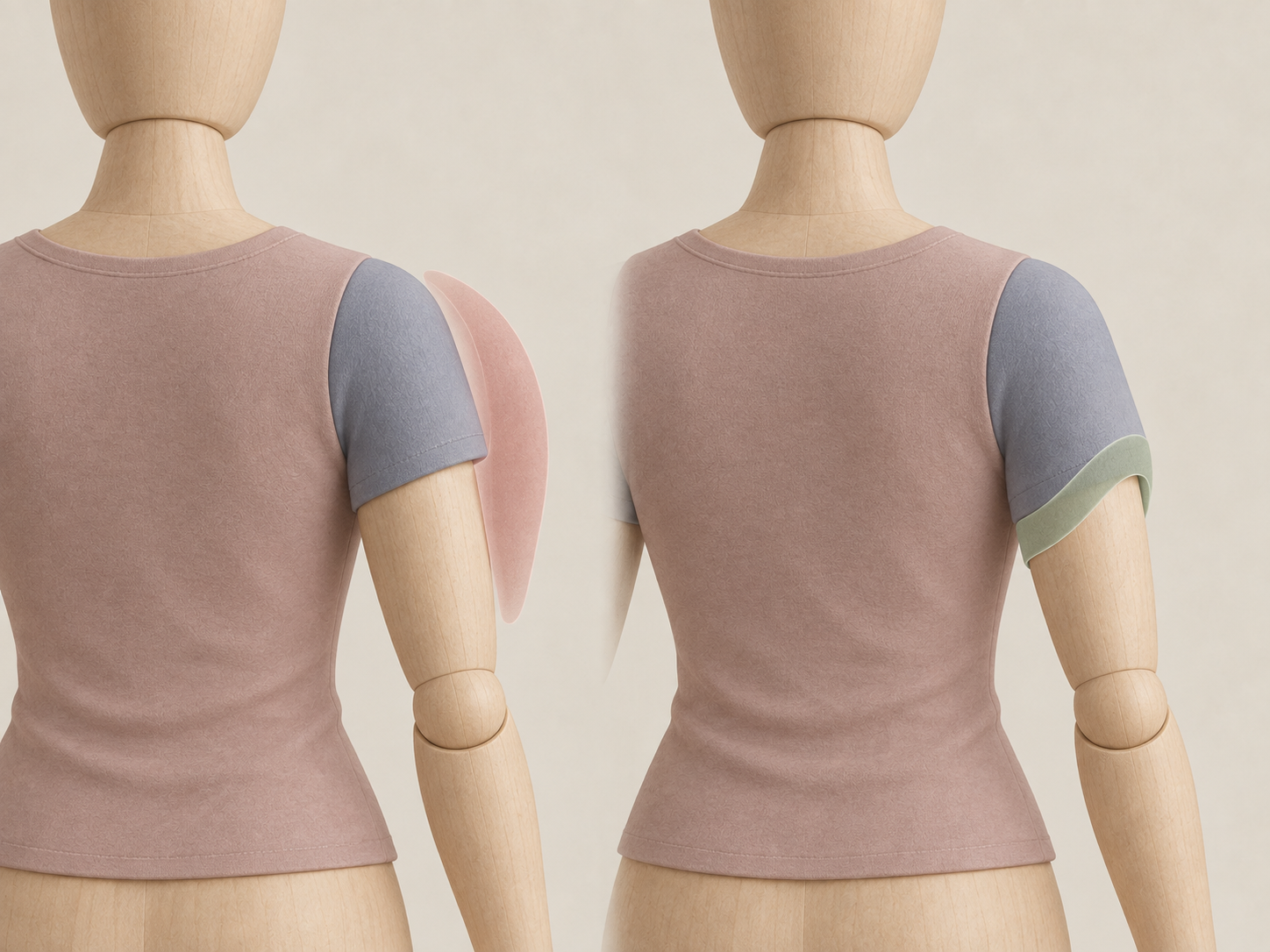
The two procedures are not in a relationship where one can be called better. They address different things. One reduces fat; the other reduces skin. So the first thing to determine is not the procedure but what is left on your arm.
Not every swaying arm is in the same condition
The single phrase “it sways” covers two different conditions.
When fat remains, the weight is what makes it move. Pinch the back of the arm and it comes up thick, and the extent of the swaying follows that thickness. Here, reducing the fat also reduces the swaying to a corresponding degree.
When skin remains, it is different. It comes up thin when pinched, yet it sways when you shake it. The skin has not contracted enough to follow where the fat has gone. Removing more fat at this point takes away the volume that was holding things up, so the leftover skin stands out more.
| Check | Closer to fat | Closer to skin |
|---|---|---|
| Pinching the back of the arm | Comes up thick | Comes up thin |
| Raising and shaking the arm | Sways in proportion to the thickness | Thin, yet sways a great deal |
| Pinching and releasing | Springs straight back | Fine creases linger, then settle |
| Recent weight change | No major change | Large loss in a short period |
| With the arm lowered | Thickness is visible from the side | Sagging is more visible than thickness |
The more items that match the right-hand column, the larger the skin component. That said, this check is for setting a direction, not for making a diagnosis. Hands take you only this far; how many millimeters the fat layer actually measures becomes visible only when ultrasound separates the layers.

When fat remains, and when skin remains
Let us separate what changes in each of the two conditions.
On an arm where fat remains, liposuction reduces volume, and the fit of your clothes is the first thing that changes. Sleeves feel less tight, and the thickness visible from the side with the arm lowered is cleaned up. The skin tightens to some degree in proportion to the volume removed, and how far it does depends on its original elasticity.
On an arm where skin remains, there is a point that liposuction alone does not resolve. There was not much fat to remove in the first place, and reducing volume further simply exposes the loose skin. In that case, reducing the skin directly enters the picture: an incision along the inner arm removes the excess skin, and the edges are sutured.
That said, arms with enough excess skin to warrant a lift are less common than you would think. Arm lifts appear frequently in top search results partly because those articles are usually written by places that perform the procedure. In actual consultations the fat component is more often the larger one, and in those cases the answer lies on the liposuction side. How to tell whether fat or skin is what remains is covered on the Arm Liposuction page.
Lift versus liposuction: the scar and the recovery differ
The biggest difference between the two procedures is not the result but the scar and the recovery burden.
Liposuction passes a cannula through openings a few millimeters wide. The entry points are placed along the inner arm or the crease of the armpit, so they fold away or stay hidden when the arm is lowered. An arm lift has to cut away excess skin, so the incision runs as a line. Depending on the degree of sagging it may end short near the armpit, or it may extend down toward the elbow.
| Category | Arm liposuction | Arm lift |
|---|---|---|
| What is reduced | Subcutaneous fat | Excess skin |
| Form of incision | Openings a few millimeters wide | A line along the inner arm |
| Scar | Hidden in a crease line | Length remains; 6+ months to settle |
| Restriction on arm use | Mostly lifted around suture removal | Longer, due to tension on the suture line |
| Final assessment | 3 to 6 months | 6 months or more |
| Line Culture Clinic | Performed | Not performed |
Let us address the last row first. The arm lift is not a procedure performed at Line Culture Clinic. This article therefore goes only as far as distinguishing which condition calls for which, and if your case points toward a lift, we direct you to confirm it with a clinic that performs it.
Whether you are willing to accept a scar makes up a large part of the decision. Abdominal lift scars can be covered to some degree by underwear or clothing, but on the arm that location is easily exposed. You need to decide in advance which will bother you more: the sagging, or the line that remains.
Scars take time to fade. At around two months they still look red, with swelling remaining nearby. By about three months the redness and pigmentation ease somewhat, and by six months a substantial fading is common. However, reaching six months does not mean the scar has fully settled. If your work involves heavy use of your arms, that tension can affect how the scar heals, and some segments may thicken and rise.
There are reduced-incision versions of the lift as well. The mini lift, as it is called, ends short near the armpit. A shorter scar is a clear advantage, but the amount of skin that can be removed is limited accordingly. Choosing this option to minimize scarring can leave the sagging much as it was, so here too the first thing to assess is how much excess skin there is.
Are there arms that need both?
There are arms where fat and skin both remain. This applies to people who have lost a large amount of weight but still have fat on the arm.
Here, sequence becomes the question. Reducing the fat sufficiently and then correcting the remaining sag cleans up not only the upper arm contour but also the line running from the elbow to the armpit. The upper arm refers to the section from the shoulder to the elbow. Pulling the skin alone, by contrast, can produce a result that differs from expectations because of the fat left behind. That is why we not infrequently plan the two together.
For the same reason, performing both procedures on the same day is not always an advantage. Waiting a few months after liposuction to see how far the skin contracts often reveals that the amount of skin to be removed is less than the initial estimate. How elasticity shapes the outcome is covered on the Arm Liposuction page.
Some people ask whether it would not be better to finish it all at once: one round of anaesthesia, one recovery. That advantage is real. On the arm, though, the benefit of separating the stages tends to be greater, because how much skin to remove only becomes clear after the fat has been reduced. Decide in advance and you will estimate generously, and estimating generously lengthens the scar.
Age also shifts the judgment. The degree to which skin contracts on its own tends to be greater when you are younger, so the room to wait differs even for the same degree of sagging. Conversely, where little contraction can be expected, it is better to plan for two stages from the outset.
If your weight loss is not finished, postpone the judgment
Finally, a word about timing. There is a worst time to judge sagging.
It is right after weight loss ends. The faster the loss, the further behind the skin lags, which makes this the period when the arm looks loosest. Judging here leads you to overstate the skin problem and to consider procedures you do not need.
With time, the skin contracts to some degree. That degree varies with age, the speed of the loss, and original elasticity, but at the very least the appearance right after weight loss is not the final one. That holds all the more if your weight is still moving, because what remains on the arm, fat or skin, keeps changing.
So when people come to us during this period, the usual answer is to look again in a few months. What to review before surgery is set out on the Pre-Surgery Examination page.
That is as far as self-assessment goes. If it comes up thick when pinched and the swaying follows that thickness, your condition does not call for a lift. If it comes up thin yet sways a great deal and you have recently lost a significant amount of weight, then the skin side needs to be reviewed as well. If the two conditions are mixed, the better sequence is to address the fat first and reassess a few months later.
There is a limit to gauging pinched thickness and the extent of swaying on your own. How many millimeters the fat layer measures, and how much excess skin there is, become visible only when ultrasound separates the layers. Determining which condition you are in is something a consultation can answer. If it is hard to tell on your own, please come by.