Arm Liposuction Results: Circumference and Line Are Not the Same Thing
About a month after surgery, most people reach for a tape measure. They check how many centimeters came off, and if the number is smaller than expected, that is when things get complicated.
Yet at the same point they say their clothes feel easier. Sleeves are less tight, and the arm looks different in photos. This gap between the number and what you feel is the starting point for understanding arm liposuction results.
Arm circumference reads differently at every stage
Arm circumference comes out differently depending on when you measure. That is not because the measurement is inaccurate; it is because the state inside the arm keeps changing.
Right after surgery, tumescent fluid and edema — that is, swelling — remain, so the reading is actually larger. Between weeks two and three the major swelling subsides and the number comes down, and from there the residual swelling clears slowly. That stretch is long, so the number you measure at one month is still an intermediate value.
Where you measure matters too. The arm differs in thickness toward the armpit and toward the elbow, and where fat is concentrated varies from person to person. On the same arm, measuring three centimeters higher or lower changes the number. So if you are going to use a tape measure, mark the spot and measure at the same place every time, or there is nothing to compare.
| Stage | By tape measure | In how clothes fit | In photos |
|---|---|---|---|
| Week 1 | May even have increased | Hard to judge because of compression wear | Masked by swelling |
| Week 3 | Starts coming down | Sleeves feel less tight | Front looks similar; the side differs |
| Week 6 | Approaches the real figure | Clearly noticeable | Visible with the arm lowered |
| 3 months | Settled | Settled | Resolved even with the arm raised |
What to note in the table is that the three columns do not move at the same speed. The fit of your clothes comes first, and the tape measure follows last.
Why the arm looks different while the number stays
There are cases where the number has barely dropped yet the arm clearly looks different. That is not an illusion.
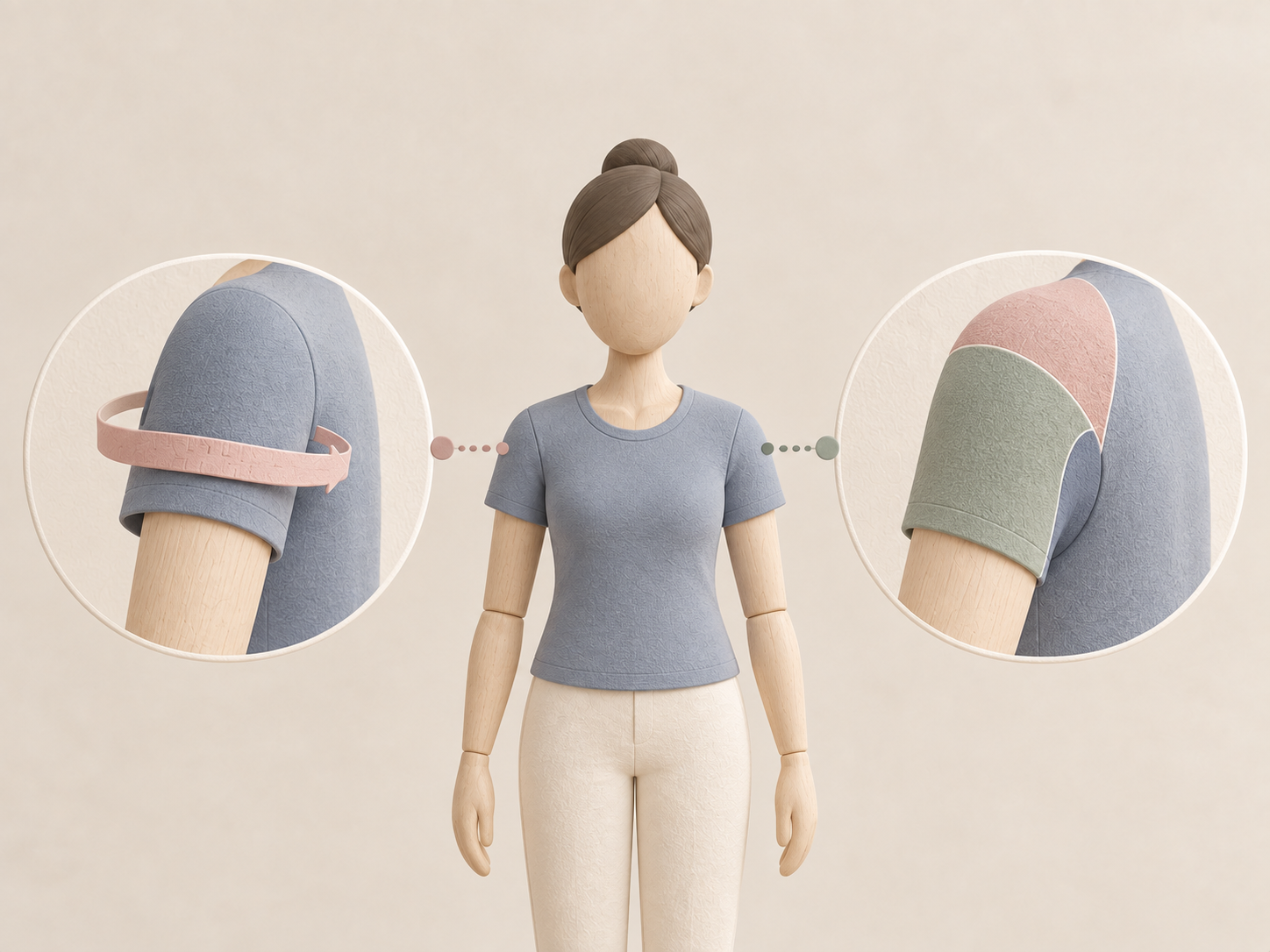
What creates the impression of an arm is not total circumference but which spot protrudes and how. At the same circumference, an arm that rises bluntly at the back looks thick, while one that runs gently from shoulder to elbow looks slim. Clothing widens that difference, because a sleeve catches at the thickest point.
Liposuction is closer to evening out the distribution than to reducing the total. It lowers what protrudes and leaves what is already recessed. When the width runs evenly from below the shoulder to the elbow, the line approaches straight, and the arm looks thinner than the measured reduction would suggest. Conversely, cutting the total sharply without regard for distribution produces a result where the number fell but the impression did not.
This is why how many cc were removed does not explain the result. For the same volume, the surface reads entirely differently depending on which layer it came from and what was left behind. Why a thin arm is not always a good outcome is covered on the Arm Liposuction page.
There is a ceiling on the reduction from the start. At the same thickness, the proportion of fat to muscle inside differs, and what liposuction can reduce stops at the fat sitting over the muscle. An arm with a large muscle component shows a smaller change in numbers from the same surgery. That is why in consultation we pinch separately with the arm relaxed and flexed. Skip this check and it is not the result that goes wrong but the expectation.
“I only had my arms done, but my back changed”
Something comes up often in consultation: the patient had only the arms treated, yet the view from behind changed.
The arm did not reduce the back. The area covered by arm liposuction frequently includes not only the inner and outer arm but the front and back of the armpit and the scapular region — the junction running into the back. Treating that zone as well tidies where the back begins, so the rear view looks different. When armpit volume decreases, the arm sits naturally closer to the torso and splays less front to back. Cut the area off at the arm, by contrast, and the arm becomes slimmer while what sits beside it stays, which can create a visible border between the two zones that was not there before.
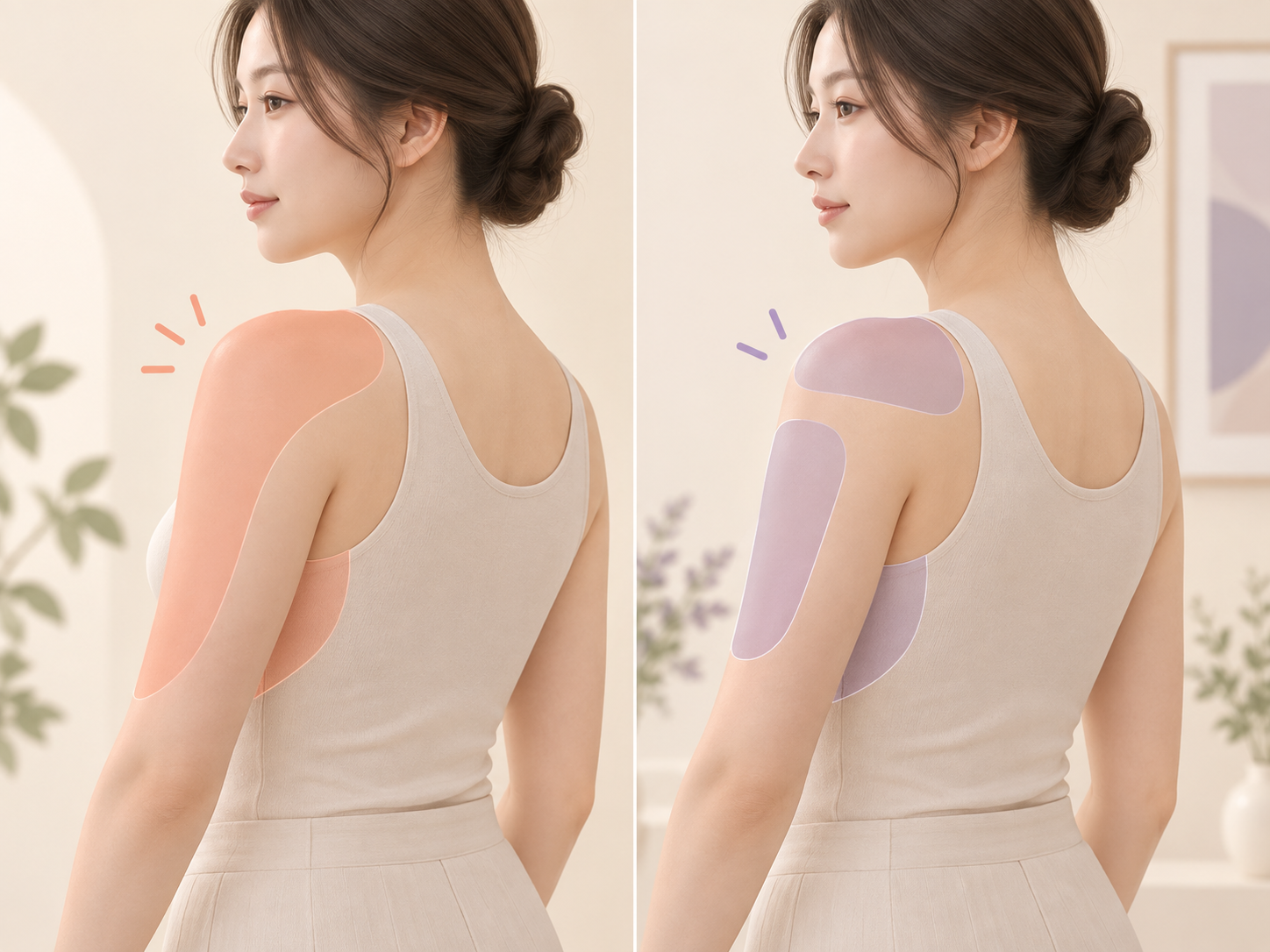
So when we assess an arm in consultation, we do not look at the arm alone. We work through side thickness with the arm lowered, the degree of sag when raised, the fold at the front of the armpit, accessory breast prominence, and the rear running into the bra line. When several of these show together, extending the area tends to give a smoother result than treating the arm on its own. How far to extend is laid out on the Arm Liposuction page.
What shows first, stage by stage
Change does not arrive all at once; it has an order. Knowing that order keeps you steadier along the way.
The fit of your clothes comes first. From around week three, people mention that sleeves are less tight. Next is the side silhouette with the arm lowered, which starts to show in photos at about six weeks. Last is how the arm looks when raised. That depends on the skin settling, so it runs close to three months.
This is why raising your arm in front of a mirror at one month invites disappointment: that particular view is not yet at a stage to answer. During this period, photographing the arm lowered from a consistent angle gives a more accurate comparison.
Fixing your conditions when you take photos makes them comparable. Same place, same lighting, same distance, and keep a front view, a side view, and one with the arm out. The arm is an area whose thickness reads differently by angle, so under different conditions genuine improvement can look like none.
Checking the mirror every day also makes you miss the change, because your eye adapts to small shifts. Placing photos taken two weeks apart side by side is far more reliable.
Satisfaction is not decided by the size of the result
There are cases where the surgical result was good and disappointment remained, and cases where the change was modest and the patient was satisfied. The difference is not the size of the result but whether what they were going to gain had been settled in advance.
Someone whose goal was the fit of their clothes is satisfied from week three. Someone whose goal was movement with the arm raised, looking at the same point, feels that nothing has changed yet. Same surgery, same course, different reception.
| Goal | What to judge by | When to check |
|---|---|---|
| Fit of clothes | How tight the sleeve feels | 3 to 6 weeks |
| Front-on impression | Side thickness with the arm lowered | 6 weeks to 2 months |
| Arm raised | Degree of sag at the back | 2 to 3 months |
| Silhouette from behind | Armpit and bra line junction | 2 to 3 months |
That is why we start a consultation by asking which posture bothers you most. Trying to solve two goals at once with the same approach tends to end without satisfying either. Separating what you will gain from what you will leave, in advance, makes the same result read differently.
It is also why numbers are hard to promise. Fat layer thickness, skin elasticity, and recovery speed differ from person to person, so the range varies even under the same conditions. Working through the items on the Pre-Surgery Examination page gives you a sense of where your arm currently sits.
If I gain weight again, where does it go?
One last frequent question. A treated area has fewer fat cells, so if your weight increases afterward, relatively more goes to other areas.
That does not mean none goes to the arm. The remaining cells enlarge. With a large gain the arm thickens too, but it does not return to the same proportion as before surgery. The increase happens on an altered distribution, so the shape differs from what it used to be.
So it would be wrong to say you can drop weight management entirely after surgery. Equally, you need to worry about the arm first less than you used to: someone whose arm used to gain first sometimes shifts to another area gaining first after surgery. Across the body the total is unchanged; what changed is where it goes.
This article opened with the gap between the tape measure and the fit of your clothes. That gap is not a misunderstanding; it is the nature of the arm as an area. Circumference measures total volume; the fit of clothes reads distribution. The two figures moving differently is normal, and the fit is usually the one that answers first.
Whether your goal is circumference or line is better settled before surgery. That is why a consultation at Line Culture Clinic photographs the arm lowered and raised, front and side. We are building the reference you will compare against later. Tell us which posture bothers you most, and we will set the treatment area around it together.