Why Arm Fat Stays Put: The Back of the Arm Is Last to Go
Some people lose the weight and the arms stay exactly the same. The pants are looser, friends say the face looks different, but the back of the arm still feels just as thick between your fingers.
If you have a wedding or a photo shoot coming up — anything where your arms are visible — the gap looks even larger. That is why so many people start searching on the evening of a dress fitting.
Look it up and the answer is almost always to lower your overall body fat further. That is not wrong, but it is no answer at all for someone who has already lowered it and still has the arms. In that case, the first step is to separate out what is actually still there.
It is not that you have not tried hard enough
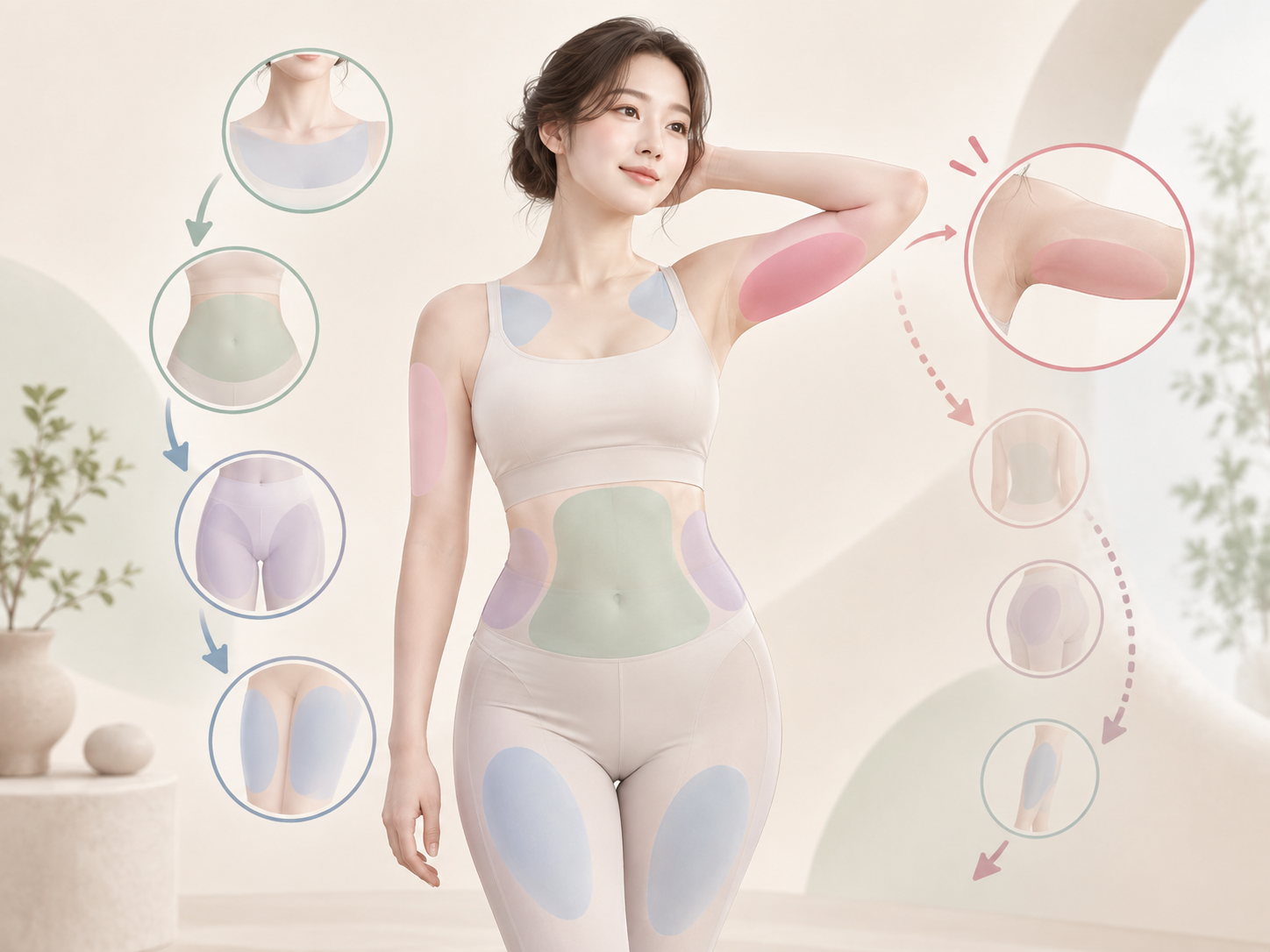
Let us draw a line first. The back of the arm holds on not because you exercised too little, but because the order in which fat comes off is fixed for each part of the body.
Body fat drops everywhere at once. Which areas go first and which go last, however, is set differently in each person. Some people lose the face and chest first. Others lose the abdomen first. If your arms sit late in that order, changes only show up there after your weight has already come down considerably.
The problem is what arrives before you reach that point. Pushing body fat lower to slim the arms hollows the face first and takes volume from the chest. You pay the price somewhere else before the change ever reaches your arms. That is why we so often hear, in consultations, that the weight came off but the face is what suffered.
Do arm exercises take fat off the arms?
This is the question we get most. Choosing one spot and taking the fat off it is not something exercise can do. The calories an arm workout burns come out of body fat as a whole, not out of the fat sitting in that one place.
That does not mean exercise is useless. It has a clear job to do in the arm.
Building the triceps gives the layer above it something firmer to sit on. The triceps is the muscle on the opposite side from the biceps. Once it has some volume, the arm swings less when you raise it, and the line reads more clearly from the side. And when overall body fat falls, the arm gets its share of that too.
But neither of those things does much to the thickness of the subcutaneous fat lying over the back of the arm. This is the case for people who have trained for a long time and still pinch something thick back there. The muscle came in, the fat layer above it did not move, and so the arm can even feel larger around than before.
It is also worth noting that training history and actual muscle mass do not always line up. People who have done mostly cardio for years often have plenty of activity behind them but little arm muscle volume. On the other end, people who have dieted repeatedly may have less muscle than before while the arm measures the same — meaning fat now makes up a larger share of what is there.
Why the back of the arm, of all places?
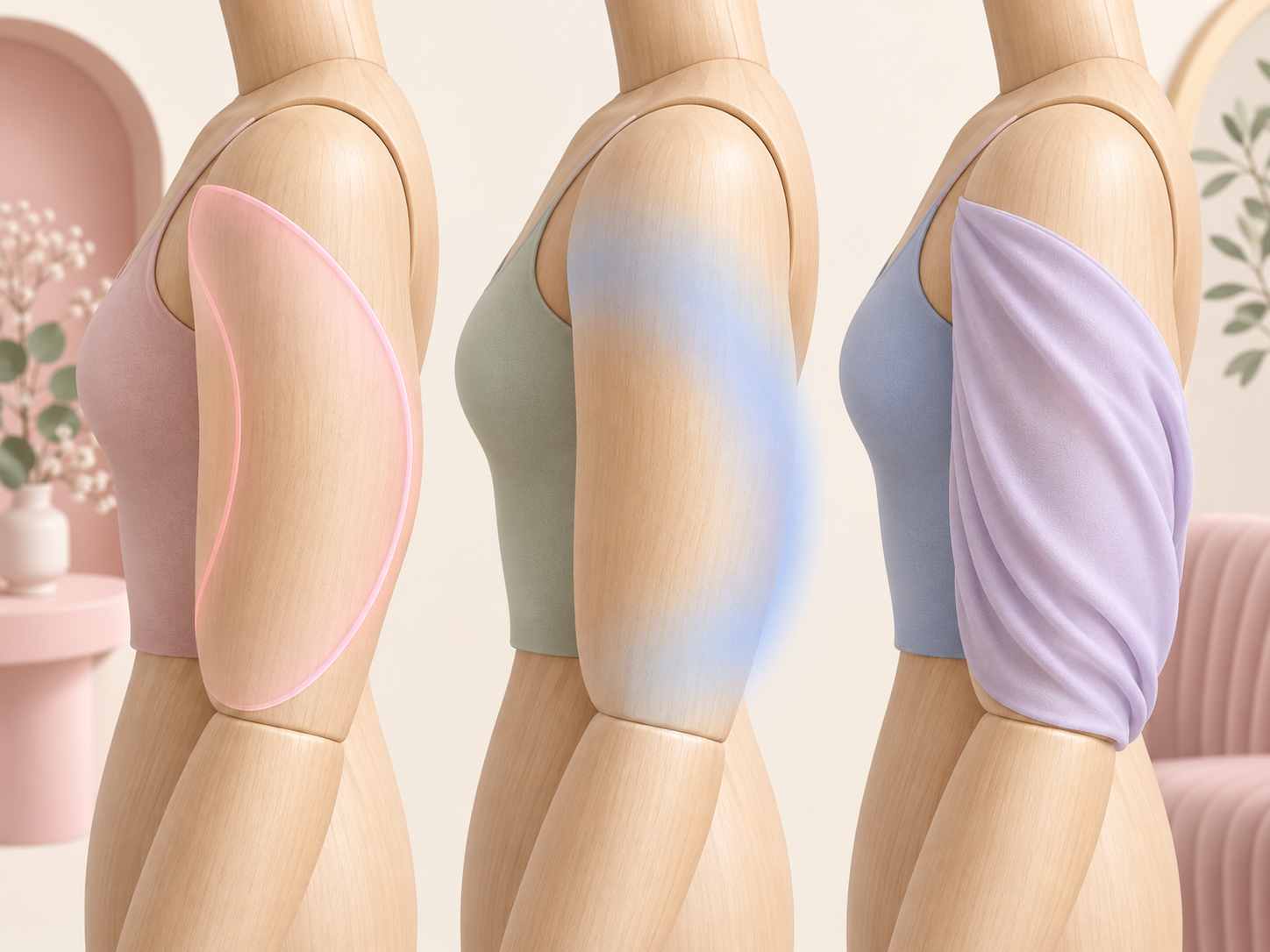
The thickness you pinch at the back of the arm can hold three different things at once. Separating them is what lets the next decision stand.
First, subcutaneous fat sitting over the triceps. This is the most common. If you relax the arm and pinch the back of it and get something thick, much of that thickness is fat. If you flex and pinch the same spot and it is still thick, that tells you how much fat is layered on top.
Second, swelling. If the arm is visibly different in the morning than in the evening, or a fingertip leaves a dent that lingers and slowly fills back in, there may be fluid mixed in. Swelling is neither fat nor muscle, so it is not something to remove. Counting it as fat leads you to judge that there is more fat than there is, and a plan built on that judgment will not meet your expectations.
Third, skin elasticity. This is when the pinch feels thin but the arm ripples as you raise and shake it. The skin has not tightened back down over the space the fat left, so removing more fat here takes away the volume that was holding things up and makes the loose skin stand out more. It shows up often after a large weight loss.
There is one more thing. Fat and muscle are not the only things that make an arm thick. Bone structure plays its part. The skeleton does not shrink by any method, so some thickness remains even after the fat is addressed. Split the reasons an arm is thick into just fat and muscle and you drop this branch entirely, which is where predictions start going wrong.
What exercise changes and what it does not
Lay out what shifts with training and what does not, and the direction becomes visible.
| What it is | Does exercise change it? | What to look at |
|---|---|---|
| Overall body fat | Yes | But the order the arm comes off in is fixed |
| Triceps volume | Yes | Less jiggle, but the arm may measure larger |
| Fat over the back of the arm | Not one spot at a time | How thick the pinch is |
| Swelling | Shifts with daily habits | Morning-to-evening difference |
| Stretched skin | Almost not at all | Thin to pinch but ripples |
| Skeleton | No | Thickness left after fat is removed |
Do not read the table down the column. Find which row your own arm belongs to. If it is one of the top two, staying with your training is the right call. From the third row down, more exercise will not give you an answer on that item. Most people span several rows, and then the first task is gauging which one carries the most weight.
If you have trained for a long time and only the back of the arm is unchanged, it is faster to find out what you are actually pinching before you add to the training load. More treatments will not move an item that was never the target. The things we look at to see whether an arm suits liposuction are set out in what to check before arm liposuction.
How far massage and body treatments reach
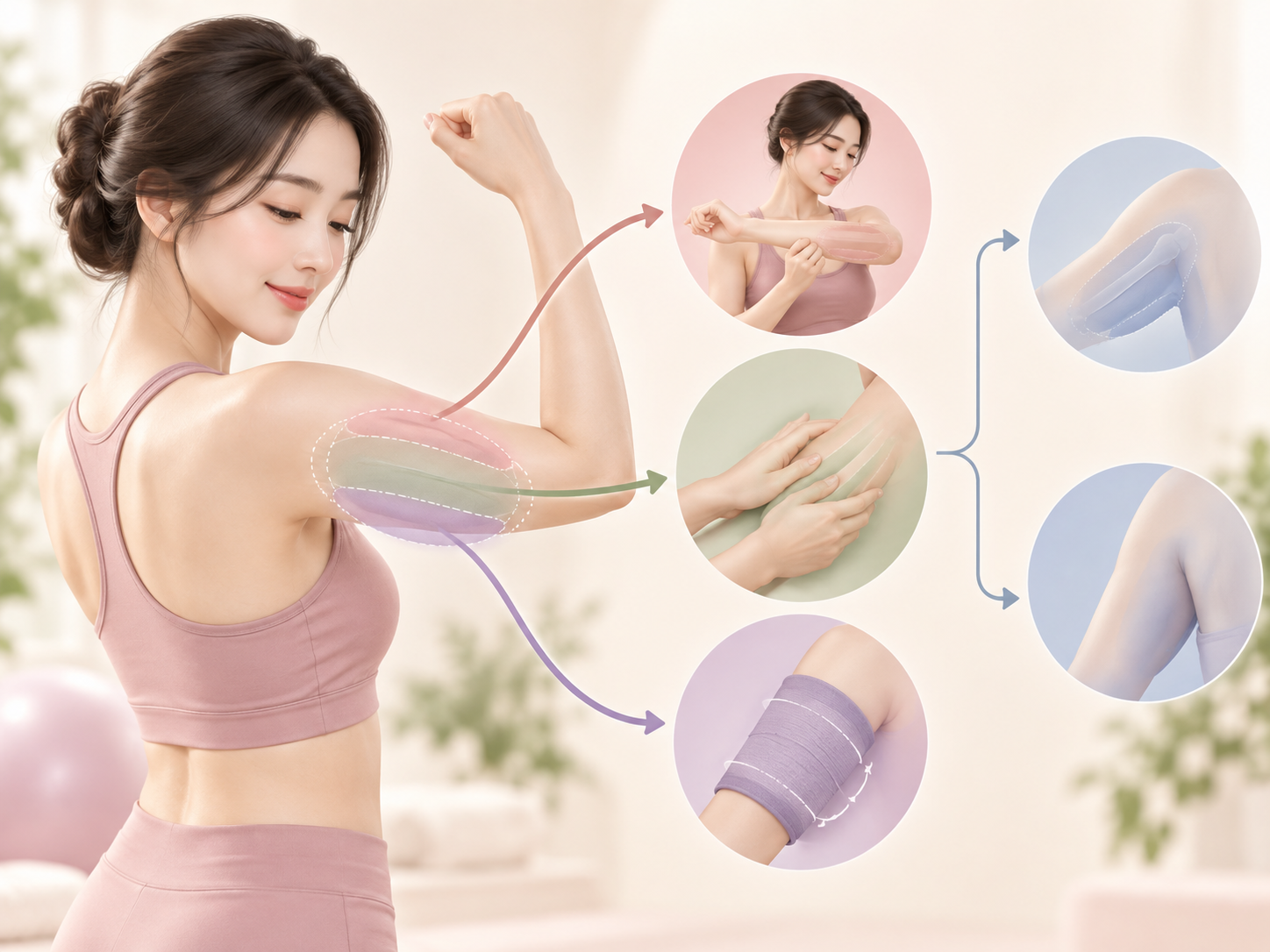
After exercise, the next thing most people try is body treatments — massage, lymphatic work, radiofrequency. Here too there is a range they reach and a range they do not.
They reach swelling. Puffiness from sluggish circulation does come down with treatment, which is why the arm feels lighter right afterward and even measures a little smaller. The larger your morning-to-evening difference was, the more you feel it.
They barely reach the thickness of the fat itself. The centimeters lost to a treatment are mostly swelling, so they usually come back within a few days. Going the route of adding more sessions here spends your time and money on fluid alone.
So when you start a course of treatments, we suggest stopping to check at the second or third session. Not right after one — about three days later, pinch the same spot and see whether the thickness is down, or whether the arm was only thinner on the day itself. If it is still thinner three days on, there is reason to continue. If it was thin only on the day, the target was swelling.
Could it just be that I am muscular?
Some people flex, feel something hard, and conclude they are simply muscular and there would be nothing to remove.
Arms that are thick because of muscle are less common than you would think. When you flex, the muscle underneath contracts and pushes the fat above it up, so the whole thing feels firm. The hardness your hand registers belongs to the muscle while the thickness you pinch belongs to the fat, and fingertips alone cannot separate the two.
The way to tell them apart is the one described above. Pinch relaxed, then pinch flexed, and see how much the thickness changes. If what you can pinch drops sharply the moment you flex, muscle carries the larger share. If it stays thick, that much fat is layered on top. How far a muscular arm can change is covered separately in liposuction for muscular arms.
First ask whether this is even the time to decide
There are periods when it is better to hold off on checking.
If you are still losing weight, the thickness you pinch today is not the final one. While the scale is moving quickly, fat volume keeps changing, so this month’s measurement and next month’s will not match. A judgment made in that window will be off in one direction or the other.
The same goes for the period right after weight loss ends. The faster it came off, the less time the skin had to follow, so you pass through a stretch where things look looser than they really are. Look precisely then and you will read the elasticity problem as bigger than it is, and start considering methods you do not need.
People who swelled a lot over the summer are also better off waiting. Take a measurement while the arm is puffy from the heat and you will conclude there is more fat than there is. Measure again once the weather cools and the number changes.
If, on the other hand, your weight has settled and only the back of the arm is left, then yes — this is a good time to look. You have already used up the range exercise can cover. Which method suits which condition is laid out in a table in arm fat treatment options compared.
To put it together: if the arm pinches thick while relaxed and measures about the same morning and evening, what is left is fat. If the measurement visibly changes within a single day, there is swelling mixed in. If it pinches thin but ripples noticeably, the skin needs looking at as well. Whether to keep training or to look at something else is decided after those three branches are separated, not before.
Hands can only take you this far. How many millimeters the fat layer actually measures, and whether that fat sits in the shallow layer near the skin or deeper down, only becomes visible once ultrasound separates the layers. That is why a consultation at Line Culture Clinic measures the back and front of the arm, the armpit, and the area around the shoulder blade separately, and records photographs with the arm both lowered and raised. If you have trained for a long time and only the arms are unchanged, find out what is still there before you add more treatments. You are welcome to get in touch with any questions.