Exercise After Liposuction: Does Starting Sooner Mean Better Results?
A few days after surgery you start to feel restless. Wouldn’t moving bring the swelling down faster? Wouldn’t exercising make the result better? That is the stage most people reach.
Look it up and almost everything is written for the abdomen or thighs. The arm is a different case. Arms are involved in most everyday movements, so even defining what counts as exercise is ambiguous. Here it is, broken down in order.
Does exercising take more off?
The conclusion first. Starting exercise sooner does not produce a better result.
The arm getting thinner after surgery is not fat continuing to come off. With the fat already removed, this is swelling resolving and the layers reattaching. That process is the work of time, not of training volume.
Raising the intensity early can in fact push the other way. Force applied to a layer that is still healing can increase swelling or make it pool on one side. That is where the experience of a more swollen arm the next morning comes from.
Nor does that mean lying still. Light movement helps circulation, and moving too little keeps stiffness around longer. The question is not whether to exercise but what intensity suits this stage.
Each stage has its own intensity
Recovery stages and exercise intensity pair up. The following describes a common course; actual timing depends on the area treated and how fast you recover.
| Stage | What is fine | Still too early | The standard |
|---|---|---|---|
| Surgery to day 3 | Light walking indoors | Everything else | Nothing that engages the arm |
| Day 3 to 1 week | Walks, everyday movement | Upper-body work, running | Not to the point of breathlessness |
| 1 to 2 weeks | Brisk walking on level ground | Raising the arm above shoulder height | Reassessed around suture removal |
| 2 to 4 weeks | Light cardio | Pulling and pushing movements | Whatever works with the garment on |
| 1 to 2 months | Lower body, light upper body | Heavy loads | The line where next-day swelling does not rise |
| After 3 months | Most limits lifted | — | Adjusted as the course goes |
Use the last column as your rule. The line at which your arm is not more swollen the next day is the ceiling for that day. If swelling is visibly up the morning after a session, the intensity was early — drop it for a few days and build back.
Sweat is a variable too. Sweating inside a compression garment leaves it damp and leads to itching. In summer, that alone often dictates how hard you train.

Why is walking allowed?
Walking is what we recommend from the day after surgery. There is a reason it is the one thing cleared while everything else waits.
It does not engage the arm. Let the arms swing naturally rather than driving them, and no tension reaches the healing layers. That is why lower-body movement is the useful kind after arm surgery.
It does help circulation. Lying still lets swelling pool; light movement reduces that stagnation. Getting whole-body circulation going helps the arm indirectly.
Start below the point of breathlessness, though. A sharply raised heart rate early on increases blood flow and can deepen swelling and bruising. Several short indoor walks beat one long one.
In summer, watch the time of day. Walking in the heat stacks sweat on top of the compression garment and makes wear harder to sustain.
Movements to be careful with after arm surgery
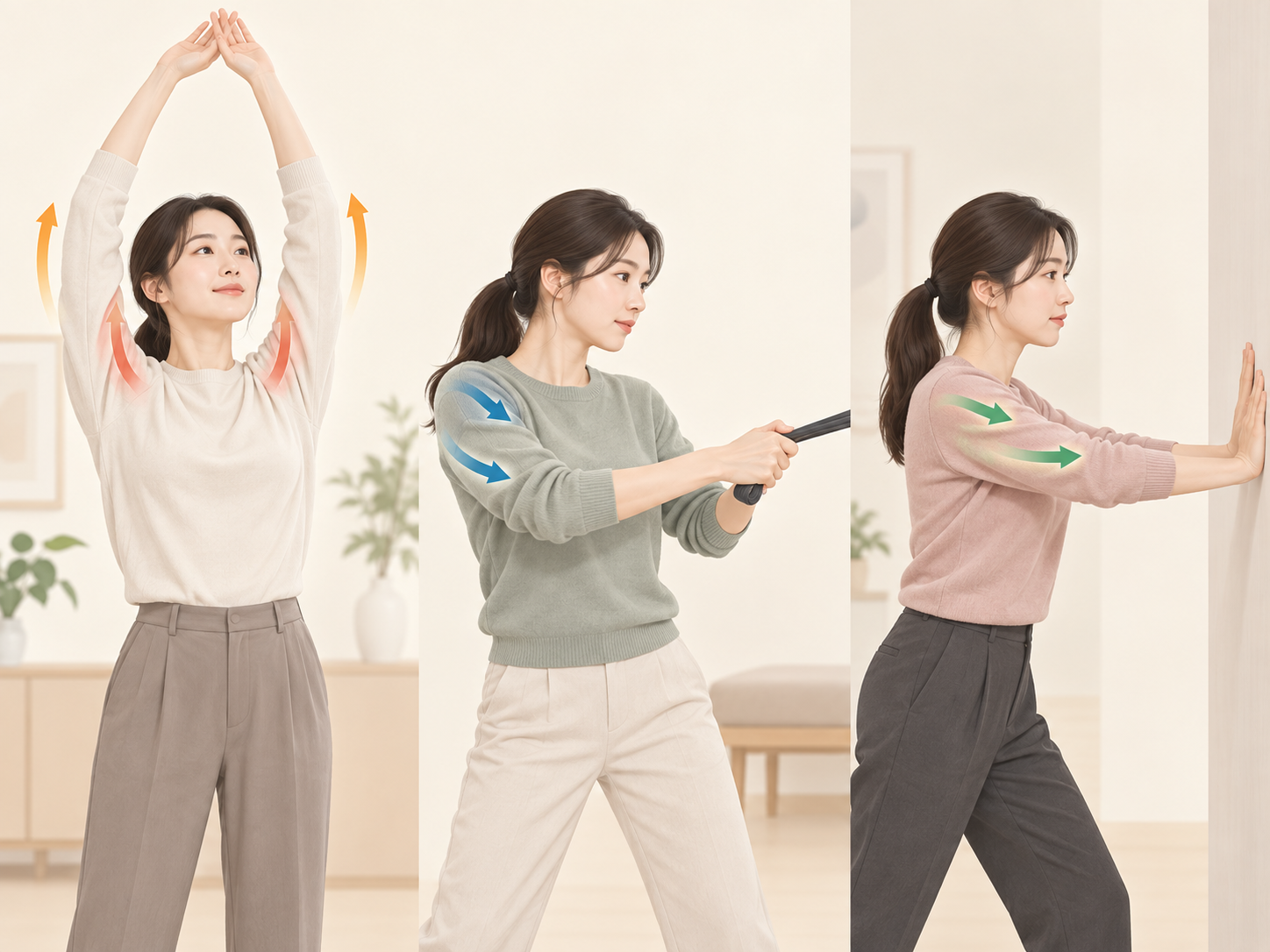
What to avoid differs by area. For the arm, the key ones are raising above shoulder height and pulling and pushing.
Raising above the shoulder pulls at the front and back of the armpit together. If the armpit was in the treated area, it is still healing and the stimulus lands directly there. Putting things on a high shelf and hanging laundry both qualify, so you run into it more often than you would expect.
Pulling and pushing put tension on the triceps and the area around them. Push-ups, lat pull-downs, dumbbell presses — anything that loads the upper body. These usually start lightly after one or two months and build as the course allows.
Yoga and Pilates depend on the movement. Poses centered on the lower body, or ones using the arm only as a prop, come back relatively early; anything bearing weight through the arm waits. Rather than clearing or blocking a whole class, it is more accurate to go movement by movement.
Swimming waits until the incisions have closed. Getting into water is itself a burden on healing sites, and strokes like freestyle add large arm rotations on top.
The order for coming back
Do not jump straight to your old intensity. Put stages in.
Build lower body and cardio first. Recovering your training volume in a range that leaves the arm out gives your body time to adapt.
Then light upper body. Run the movement with no load and check swelling and soreness the next day. If that is fine, start adding light weight.
Heavy loads come last. Do not go back to your old numbers. Start below half and build over several weeks.
At each stage, use how you feel the next morning as your standard. If swelling has not risen and pain has not increased, that intensity holds. If it has, drop a step and try again in a few days.
People worry about losing muscle while they rest. A few weeks off does not change much, and pushing through and delaying recovery ends up costing more time off in the end.
Does exercising to reduce swelling work?
This one deserves its own section.
There is an indirect benefit. Whole-body circulation keeps stagnant fluid from settling. That is why light walking beats staying horizontal.
Moving the arm itself to drive swelling out is a different matter. Large rotations or forceful movements stimulate healing layers, and that stimulus can increase swelling instead. The more swollen arm the next morning comes from exactly this.
Keeping the arm above heart level does help early on — resting it on a cushion while seated, propping it slightly while asleep. That is positioning, not exercise.
Drinking plenty of water and going easy on salt help too. But there is individual variation: the same routine resolves swelling at different speeds in different people. Rather than comparing your week to someone else’s, compare your last week to this one.
Many people switch to indoor workouts in summer. In a heavily air-conditioned room, sweat cooling on the skin can leave muscles feeling tight; warming up and cooling down lightly makes a noticeable difference.
When can massage or body treatments start?
This comes up alongside exercise, so here it is.
Strong treatment early is not something we recommend. Stimulating a layer that is still healing can increase swelling. When treatments start and at what intensity is set, and moving that date earlier does not move recovery earlier.
They generally start once swelling has largely come down and the incisions have closed. That point depends on the area treated and your recovery speed, so follow the instructions from where you had surgery.
Compression, on the other hand, matters from the beginning, because it closes the space left where the fat was and helps the layers reattach. Keeping your training within what is possible with the garment on is the better approach. How the body moves through each stage is set out in how long swelling lasts after liposuction.
When everyday activities become possible is covered separately in when you can return to work and drive after arm liposuction.
When to resume exercise differs from person to person. The area treated, recovery speed, and the kind of training you do all vary, so it is hard to state in weeks. That is why, when we review your course at Line Culture Clinic, we set the intensity you are cleared for together with you. Tell us what kind of training you do and we will go through it movement by movement.