Thigh Liposuction Checklist: How Far the Assessment Should Reach
People considering thigh liposuction usually name the same areas: the inner thigh, saddlebags, the outer line, and the fat above the knee. When diet and training stop changing how trousers fit, or a gap between the thighs never appears, surgery enters the conversation.
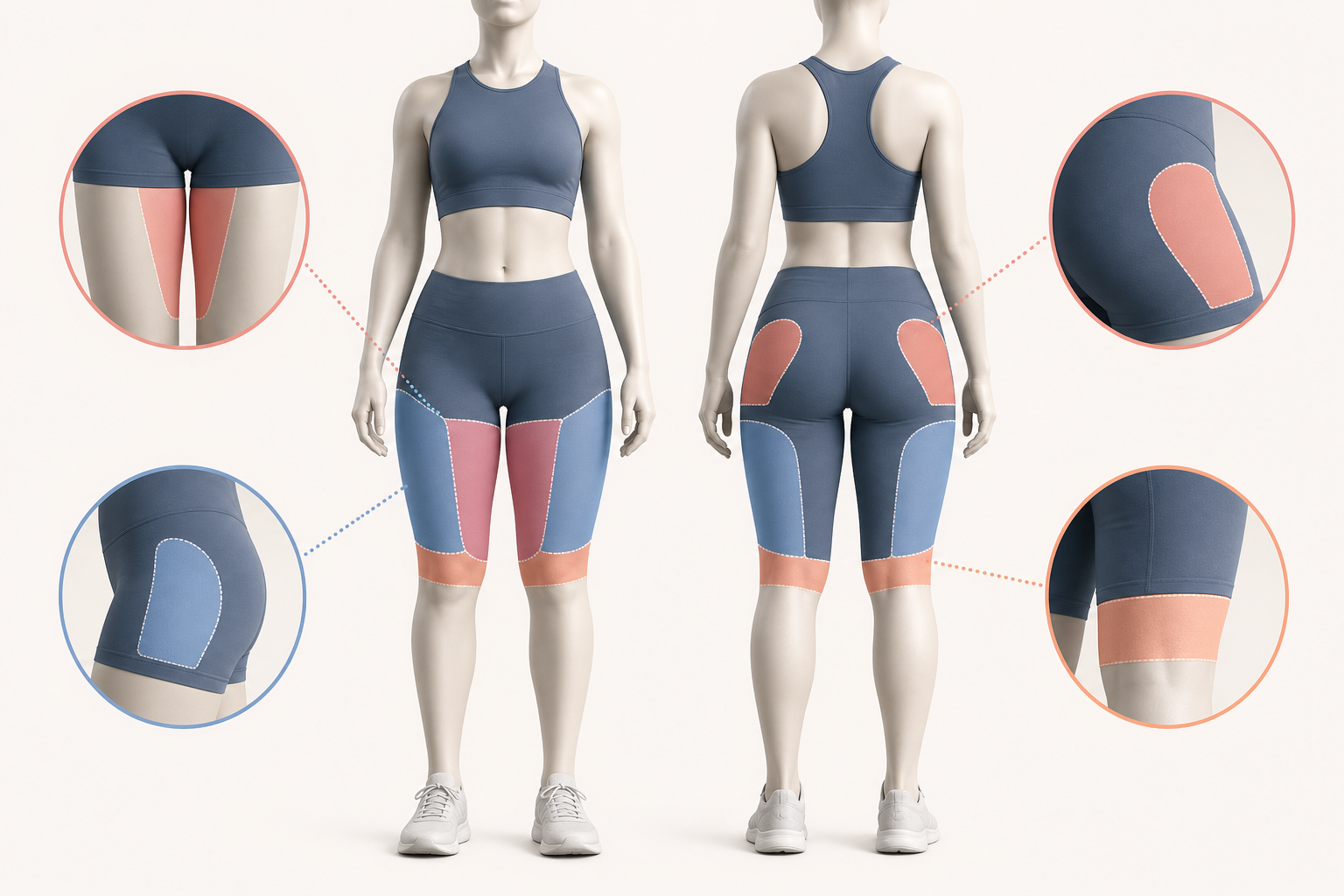
But the thigh is not simply “somewhere you remove the inner fat.” Pelvic width, the axis of the leg, where the saddlebag sits, skin elasticity on the inner thigh, and the junction above the knee all have to be read together for the line to look natural.
The most important item on any checklist is not how much to remove from where, but how far the assessment should reach.
Which areas need assessing?
Where fat gathers on the thigh differs from person to person. For some, the inner thighs touching is the concern; for others, saddlebags widen the area below the hip. And fat left above the knee makes the leg read as heavy even after the thigh reduces.
So rather than examining areas one at a time, establish which part is interrupting the line within the silhouette of the whole leg. The inner thigh and the saddlebag sit on the same thigh but call for different surgical directions.
| Area | What to check | What the consultation establishes |
|---|---|---|
| Inner thigh | Where it touches when walking, the gap between thighs | Skin elasticity and the risk of hollowing |
| Saddlebags | The outward flare on the side line | How it connects to the pelvis and buttock |
| Front of thigh | Volume that reads thick from the front | Separating muscle projection from fat layer |
| Above the knee | A heavy junction between thigh and calf | Whether over-removal would create a border |
Rather than looking at the inner thigh alone or the saddlebag alone, start by separating out what is making the whole leg read as wide.
When does it suit?
The thigh often keeps specific areas after weight loss. Saddlebags and the inner thigh in particular change shape little as the scale moves, which is where the frustration comes from.
That said, looking thick does not make every thigh a candidate. Where muscular build, pelvic structure, fluid retention, or skin laxity is the driver, reducing fat alone will not deliver what you pictured.
| Your current state | What to look at first | Why |
|---|---|---|
| The inner thigh pinches softly | Check the fat layer | Subcutaneous fat may be the main driver |
| The outer thigh flares outward | Design the outer line | The link to pelvis and buttock is decisive |
| The thigh is firm with obvious muscle | Separate muscle from fat | Liposuction cannot reduce muscle thickness |
| Thin skin with existing laxity | Assess elasticity first | Over-removal brings laxity and unevenness |
What to confirm before choosing a clinic
Thigh liposuction is surgery, not a treatment. So rather than comparing price or before-and-after photos, confirm the anesthesia and safety setup, pre-operative testing, surgical design, and the aftercare structure.
The thigh in particular can involve a wide area, and it is affected by walking and everyday movement. Check whether body assessment beforehand and follow-up afterward are done thoroughly.
| What to check | Why it matters |
|---|---|
| Anesthesia and monitoring | Bears on safety during surgery and emergency response |
| Pre-operative testing | Confirms fitness for surgery and recovery risks |
| Body design | Pelvis, leg axis, and fat distribution change the plan |
| Aftercare and follow-up | Bears on swelling, bruising, firmness, and how the line settles |
Why over-removal is the risk to watch
The thigh shows unevenness and hollowing readily. The inner thigh, the outer flare, and the area above the knee — places where the fat layer is thin or the skin moves freely — call for more caution.
Make volume the goal and you can end up with a gap between the thighs but a surface that is not smooth, or a visible border between the thigh and the area above the knee. Even thickness and a natural junction matter more than how much comes out.
| What worries people | Why it can happen | What to confirm beforehand |
|---|---|---|
| Unevenness | Uneven removal, firmness during healing | Fat layer thickness and skin elasticity |
| Hollowing | Too much taken from one spot | The plan for the inner thigh and above the knee |
| Skin laxity | Low elasticity, large weight change | Whether skin can follow the space left behind |
| Asymmetry | Existing leg axis, pelvic difference, uneven swelling | Recording left-right differences before surgery |
Judge the change at four to six months
The thigh holds swelling and firmness longer than most areas. Early on, bruising and swelling obscure the change; over time, how trousers fit, the gap between the thighs, and the side line gradually shift.
By around four months the major swelling has largely gone and the line can be read realistically, though residual swelling and firmness sometimes continue resolving through five and six months. Rather than concluding from a single point in time, compare in the same position, the same lighting, and the same clothing.
| Stage | What may be visible | What to check |
|---|---|---|
| 1 to 2 weeks | Bruising, swelling, walking discomfort | Far too early to judge the final line |
| 1 to 3 months | Major swelling eases; the line begins to change | Follow firmness and asymmetry |
| Around 4 months | Trouser fit and side line become clearer | Compare in the same clothes and position |
| 5 to 6 months | The line settles further | Close enough to treat as the final result |
If the recovery course is what you want to understand, read how long swelling lasts after liposuction alongside this.
We read the thigh as part of the whole leg
In consultation we do not isolate the inner thigh or the saddlebag. We look at the pelvis, the axis of the leg, fat distribution front, back, inner and outer, and the junction above the knee.
Ultrasound, photographic review, and a pinch test establish the fat layer and skin elasticity, and we design the continuity of the line and the recovery plan before settling on volume. Because the thigh moves constantly, compression and follow-up afterward matter as much.
At Line Culture Clinic, in a private space near Exit 3 of Apgujeong Station, we establish your current thigh line first, then discuss the scope and recovery plan. If you are unsure how far the assessment should reach, bring photographs from the front, the side, and behind. You are welcome to get in touch.