Arm Liposuction and Accessory Breast Tissue: Which Arms Need Both
Some people come in to ask about their arms and hear about the armpit for the first time. You were thinking only about the arm, and being told that the bulge at your side needs looking at too can sound like someone widening the scope on you.
So this article goes only as far as separating the cases where the arm alone is enough from the cases where both need looking at. It is not an argument that doing both is always better.
The arm got thinner — why is the side unchanged?
There is something we hear often in follow-up consultations. The arm is clearly smaller, but the bulge that shows at the side when the arm is held against the body is exactly as it was.
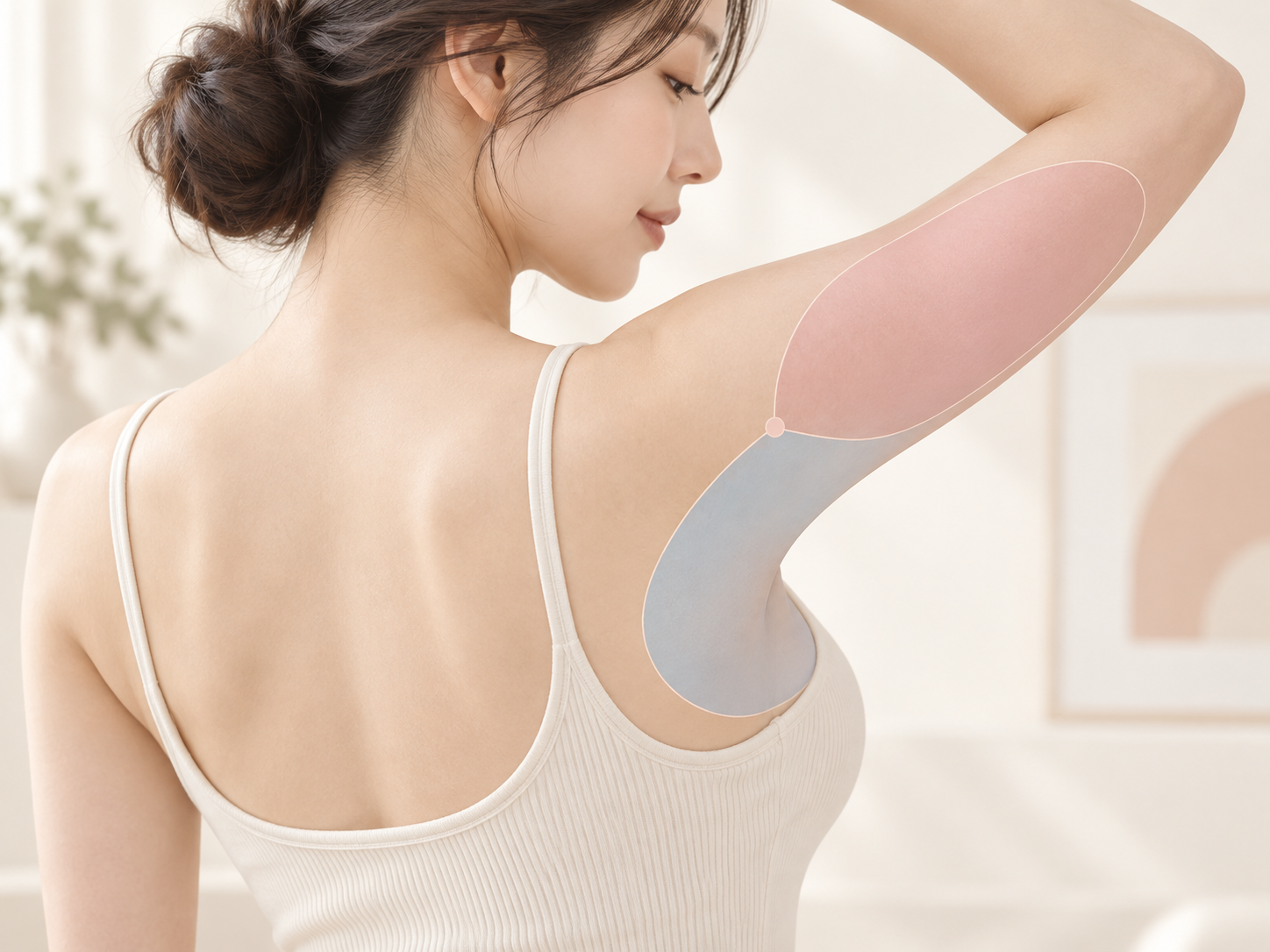
The reason is simple. That bulge was outside the arm’s territory. The mass you feel at the front of the armpit looks continuous with the fat at the back of the arm, but as a surgical zone it is a different place. Stop at the arm and a step can appear between the part that was addressed and the part that was not.
Clothes make the difference larger. Sleeveless tops and anything fitted show the side line where the arm meets the torso more than they show the arm itself. If the arm measures smaller but that line is unchanged, the difference you see in the mirror falls short of what you expected.
Not everything bulging at the armpit is fat
There is one more thing to separate here: whether what you feel at the front of the armpit is fat, or accessory breast tissue with glandular tissue mixed into it.
People call it accessory breast, though that is not a precise term. It refers to breast tissue that extends toward the armpit and remains there, and glandular tissue is sometimes part of it. Glandular tissue behaves differently from fat, so suction does not reduce it by the same amount.
There are a few clues that help tell them apart.
- If the size or tenderness changes with your menstrual cycle, glandular tissue may be mixed in.
- If it shrank along with your weight, fat makes up the larger share.
- If it feels firmer and more like a knot than the tissue around it, it may not be fat alone.
These point you in a direction; they are not a diagnosis. Which one it is becomes clear only when ultrasound examines the tissue. We do that check first because planning suction alone when glandular tissue dominates leads to a result that does not match what was expected.
Where fat dominates, the area is addressed the same way as the arm. Where glandular tissue dominates, how much suction can reduce is limited, and we then look separately at whether a different approach is needed. Knowing that boundary before you start is very different from finding it out afterward.
If you have already tried injections
Some people come in after several rounds of injections for an armpit bulge that did not respond the way they hoped.
Rather than calling the injections a wrong choice, we first consider the possibility that glandular tissue was mixed into that bulge. What the medication breaks down is fat cells, so if glandular tissue makes up a large share, adding sessions produces little you can feel. Where fat lies shallow, on the other hand, injections do have a real share of the work.
So whether to add more sessions or change methods is better decided after confirming what is actually in that spot. Adding sessions without looking at tissue composition spends time and money somewhere that was never the target.
What is left if you do the arm alone?
Few articles answer this concretely. Here is what remains, place by place.
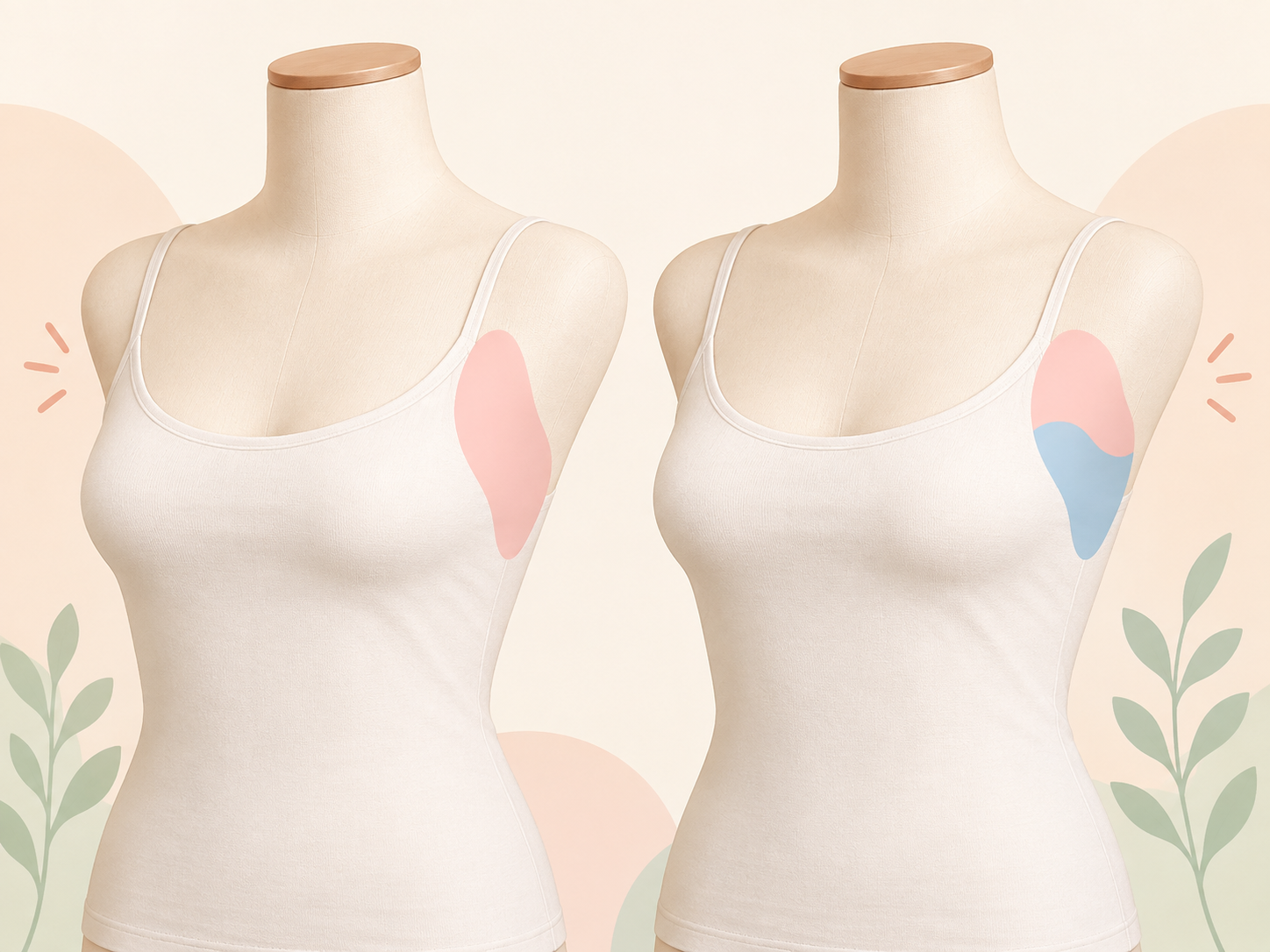
The side line with the arm against the body remains. As the back of the arm thins, the bulge at the front of the armpit stands out more by comparison. That is why the arm measures smaller while the width you see from the side in the mirror feels about the same.
The fold when you raise the arm remains. Lift the arm and the front of the armpit folds into something thick, and because that spot sits outside the arm’s scope, addressing the arm alone leaves it as it was. If your photos often involve raised arms, this part keeps catching your eye.
What sits above the bra band remains. The place where flesh spills over the front band belongs to the same zone. Even with a thinner arm, if this is unchanged, a fitted top does not look much different.
On the other hand, the arm’s own circumference and the thickness seen from the side with the arm lowered do clearly come down. Sleeves stop pulling and long sleeves fit differently. So if your goal is how sleeves fit, the arm on its own is enough.
The key is dividing up, in advance, what changes and what stays. Start without that division and you can end up dissatisfied with a result that is not actually poor.
Should I do both, or is the arm enough?
Here are the criteria side by side. The more items that land in the right column, the smoother the result when both are addressed.
| What to check | Arm alone is fine | Look at both |
|---|---|---|
| Arm held against the body | The side line is smooth | A bulge pushes forward |
| Arm raised | The armpit hollows | The fold pinches thick |
| Wearing a bra | Nothing spills over the band | Flesh sits over the front |
| When you lost weight | This area came down too | Only this area stayed |
| The clothes that bother you | Tops with tight sleeves | Sleeveless and fitted tops |
The bottom two rows decide more than the others. If the weight came off and only that area stayed, it is a zone that general weight loss does not resolve, and if the clothes on your mind are sleeveless, your goal is the side line rather than arm circumference.
If all three of the top rows fall on the left, there is no reason to bring the armpit into the scope. When the adjoining zone is clean, the arm on its own is enough. What matters is not how wide you go but whether the stopping point was chosen while looking at the back and the side. How far the scope is taken is set out zone by zone in arm liposuction scope.
When one procedure covers it, and when it does not
If both are to be addressed, they are usually handled within the same procedure. There is often no need for additional incisions, since the entry point at the arm can reach the armpit. The recovery burden is not much different from the arm alone.
Where glandular tissue dominates, though, it is a different story. Suction can reduce the fat around it, but reducing the tissue itself calls for another approach. In that case we divide, before surgery, what suction will address and what it will not. The places people end up dissatisfied with usually sit right on that boundary.
In recovery, the armpit also stays swollen longer than the arm. It is a spot that moves constantly and where tissue layers overlap, so it follows a little behind after the arm has settled. That means you pass through a period around a month out where the side line alone feels unchanged. What you see then is not the final result. Plan on three to six months before the final assessment.
Even under the same conditions, the range of results differs from person to person, because tissue composition, skin elasticity, and recovery speed all differ. That is why how much can change is something we can only tell you after looking at the arm and the armpit together.
Check just this much before surgery
In order, it comes to this.
First, look in the mirror with the arm held against the body and then raised, and see whether the side line pushes forward. If it does, pinch that spot and recall whether it feels firmer and more knotted than its surroundings, and whether it changes with your cycle.
The rest is confirmed in consultation. Ultrasound shows the tissue composition, and the range suction will address is separated out first. Decide the scope without that step and someone who needed only the arm ends up going wider, or someone who needed both does the arm alone and keeps the side line. What to ask and what to confirm beforehand is set out in what to check in an arm liposuction consultation.
The answer depends on whether your goal is a thinner arm or the side line you see in a sleeveless top. Trying to solve both with a single plan sometimes ends with neither being satisfying, which is why we ask about the goal first.
Whether what you feel at the armpit is fat or tissue with a glandular component cannot be settled by hand. That is why a consultation at Line Culture Clinic checks tissue composition with ultrasound and records photographs with the arm both against the body and raised. If you are finding it hard to decide between the arm alone and both, come in and we will look at it together.