Minimizing Liposuction Scars: Placement Matters More Than Count
When people weigh up liposuction, scarring is often the worry that lingers longest. However good the line looks, a visible incision mark stays on your mind in short sleeves, a swimsuit, or anything sleeveless.
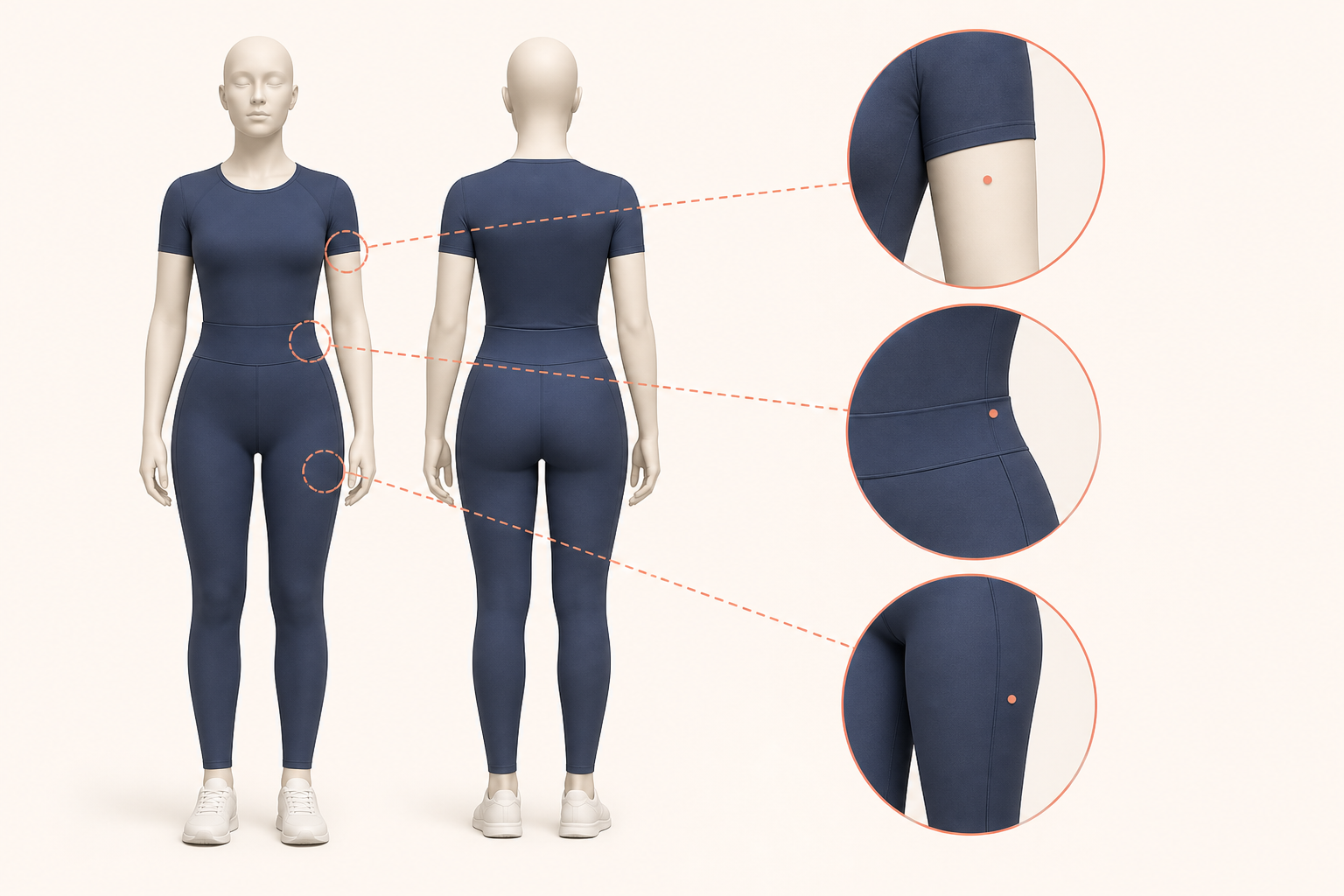
So we are often asked whether it can be done through a single incision, or whether scarring can be avoided entirely. But keeping scars small is about more than reducing the number of incisions.
Scarring depends on size, placement, how much the skin is irritated, how it is closed, and how recovery is managed. Sometimes placing small incisions where they are less visible produces a more natural result than minimizing the count.
This article covers why scars form, and what to establish before and after surgery to keep them small.
Why do scars form at all?
Liposuction makes small openings in the skin and passes a thin tube called a cannula through them to remove fat. The incision is small, but skin has been opened and has to heal — so no one can promise there will be no scar.
Scars become noticeable when these factors stack up.
- The incision sits somewhere exposed
- The cannula passing back and forth irritates the edge of the opening
- The incision ends up larger than it needed to be
- Suture or stitch marks remain
- Pigmentation develops afterward
- The person’s skin tends to heal with raised scars
- Care falls short — sun exposure, friction, a folded compression garment
In other words, scarring is not settled by the incision made on the day. The surgical design, the irritation during surgery, the closure, and the recovery management are all connected.
Placement does more work than count
People worried about scars usually ask about the number first. Fewer incisions does reduce some burden. But prioritizing the count can force the surgical path into awkward angles, leaving the line uneven or concentrating irritation at one opening.
So what matters is not “how many” but “where, how small, and hidden in which direction.”
Good placement generally meets these conditions.
- Somewhere it can sit inside a natural crease
- Somewhere covered by underwear or a swimsuit line
- Somewhere that folds away or is hidden when the arm is down
- Somewhere shadowed — the jawline, the crease at the earlobe, the hairline
- Somewhere without excessive movement and friction
- Somewhere that reaches the treatment area evenly
Rather than minimizing the count at all costs, we prioritize placing small incisions where they show least. We look for points that are naturally covered — a crease, an underwear line, the hairline — so the marks stay out of view in daily life.
Related: liposuction at Line Culture
Placement differs by area
Face
On the face even a small mark draws attention, so we consider the crease below the earlobe, the shadow under the chin, and inside the hairline.
Arms
Arms are exposed in sleeveless tops, short sleeves, and swimwear. We consider placements around the elbow, within an armpit crease, or hidden by the bra line. The arm is not only the upper arm — it connects to the armpit, accessory breast tissue, and the side of the chest.
Abdomen
Inside the navel, along the underwear line, or in the bikini line all offer cover. But the plan runs from the lower abdomen through the upper abdomen, flanks, and lower back, so placement has to match the design of the whole line.
Thighs
Here we weigh the inner thigh, the crease under the buttock, the underwear line, and exposure around the knee. A mark near the knee is noticeable in shorter clothing, so the direction of approach and the cannula length get considered together.
Why a thin cannula and a protected opening matter
Keeping scars small depends on using a thin cannula and protecting the edge of the incision. A thinner cannula allows a smaller opening and helps reduce tissue irritation.
Several things have to come together.
- Choosing a cannula that a small incision can accommodate
- Protecting the opening so its edges are not stretched
- Designing the surgical path so irritation is not concentrated at one point
- Careful technique that leaves the fat layer even
- Keeping the volume removed within what the skin can follow
Related: before surgery
Closure and stitch marks affect the result too
Scarring is not decided by incision size alone. Imprecise closure can leave stitch marks, or let the incision line read as spread.
To help it heal well, the following care makes a difference.
- Keep the incision clean and dry until the sutures are out
- Check that the compression garment is not folding over or pressing hard on it
- Do not pick at scabs
- Cut back on alcohol and smoking to give healing better conditions
- Avoid saunas, heated rooms, and pools early on
- Limit sun exposure to prevent pigmentation
Related: post-surgery care
Pigmentation takes time
Scars often look red or dark at first. They usually fade with time, but depending on skin type and care, pigmentation can persist.
Early care is what reduces it.
- Keep sun off the scar
- Avoid clothing that rubs repeatedly
- Make sure a fold in the compression garment does not sit on the incision
- Do not force off scabs or dry skin
- Use scar ointments or patches according to your clinician’s instructions
- Contact the clinic if redness, heat, or pain is significant
If you scar easily, say so in the consultation
Mention it in advance if any of these apply.
- You have had keloid or hypertrophic scarring
- A piercing or surgical scar has healed raised
- Your wounds tend to stay red for a long time
- Your skin pigments easily
- You have eczema, dermatitis, or contact allergies
- A previous liposuction scar bothered you
Scarring easily does not rule liposuction out. It does mean that incision placement, closure technique, and the aftercare plan have to be set more carefully.
How we think about hiding scars
Our approach to liposuction is closer to calculating proportion and line than to removing volume. The same applies to scars.
- Hiding them in creases, underwear lines, and the hairline
- Securing a path that can treat the whole area evenly
- Reducing irritation with small incisions and careful closure
- Reviewing the course at one, two, three, and six months
- Following recovery through regular checks and matched aftercare
At Line Culture Clinic, in a private space near Exit 3 of Apgujeong Station, we carry this through quietly from pre-operative testing to post-operative care.
How a scar settles varies from person to person. Tell us about your own healing history and the situations where exposure matters to you, and incision placement gets planned around those conditions. You are welcome to get in touch.