When the Bra Line Has to Be Part of the Plan for the Back to Look Right
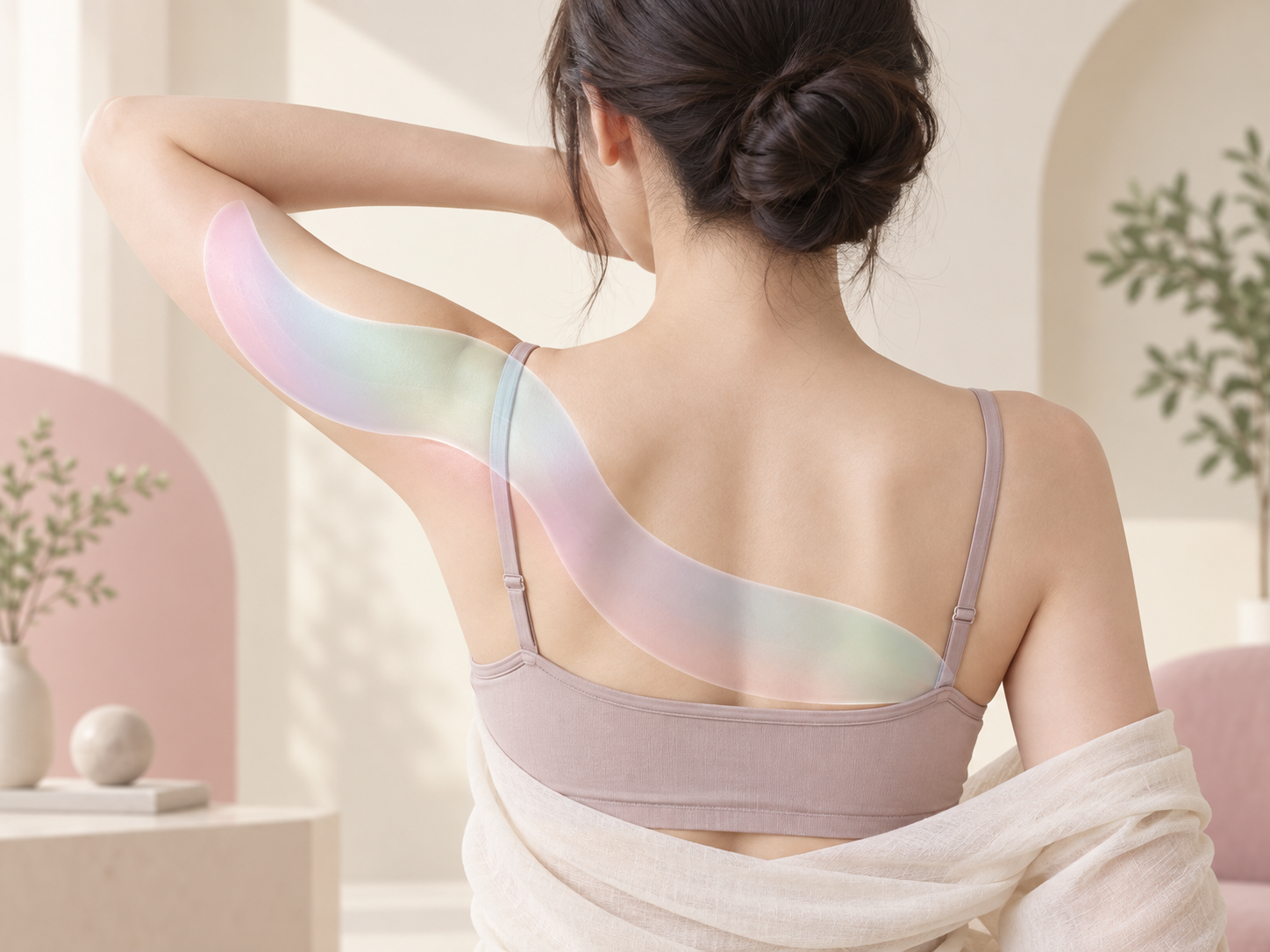
Most people looking into arm surgery judge by the arm as seen from the front. You raise it in front of the mirror, check the thickness from the side, and even the photos you take are front and profile.
But the angle other people see most often is the back. And the back is the hardest view to check on yourself. This article is about what remains behind you when only the arm is addressed, and how to find that out in advance.
Have you ever really seen your own back?
Looking behind you in a mirror means twisting, and the moment you twist, the posture of your shoulders and back changes. So the back you see in the mirror is not the back other people see.
A photograph is more accurate. Ask someone to take one with your arms down and another with them slightly away from the body. Stand a step out from the wall, and have the camera at your own height rather than angled down at you. Shoot from above and the back looks thicker than it is.
Once you have the picture, you see things the front view never showed: how the line at the back of the arm carries over from the shoulder into the back, whether flesh sits above the band of your bra, whether there is volume around the shoulder blades. Set the scope from the front view alone and these places drop out of the decision entirely.
Treating only the arm can create a line at the back
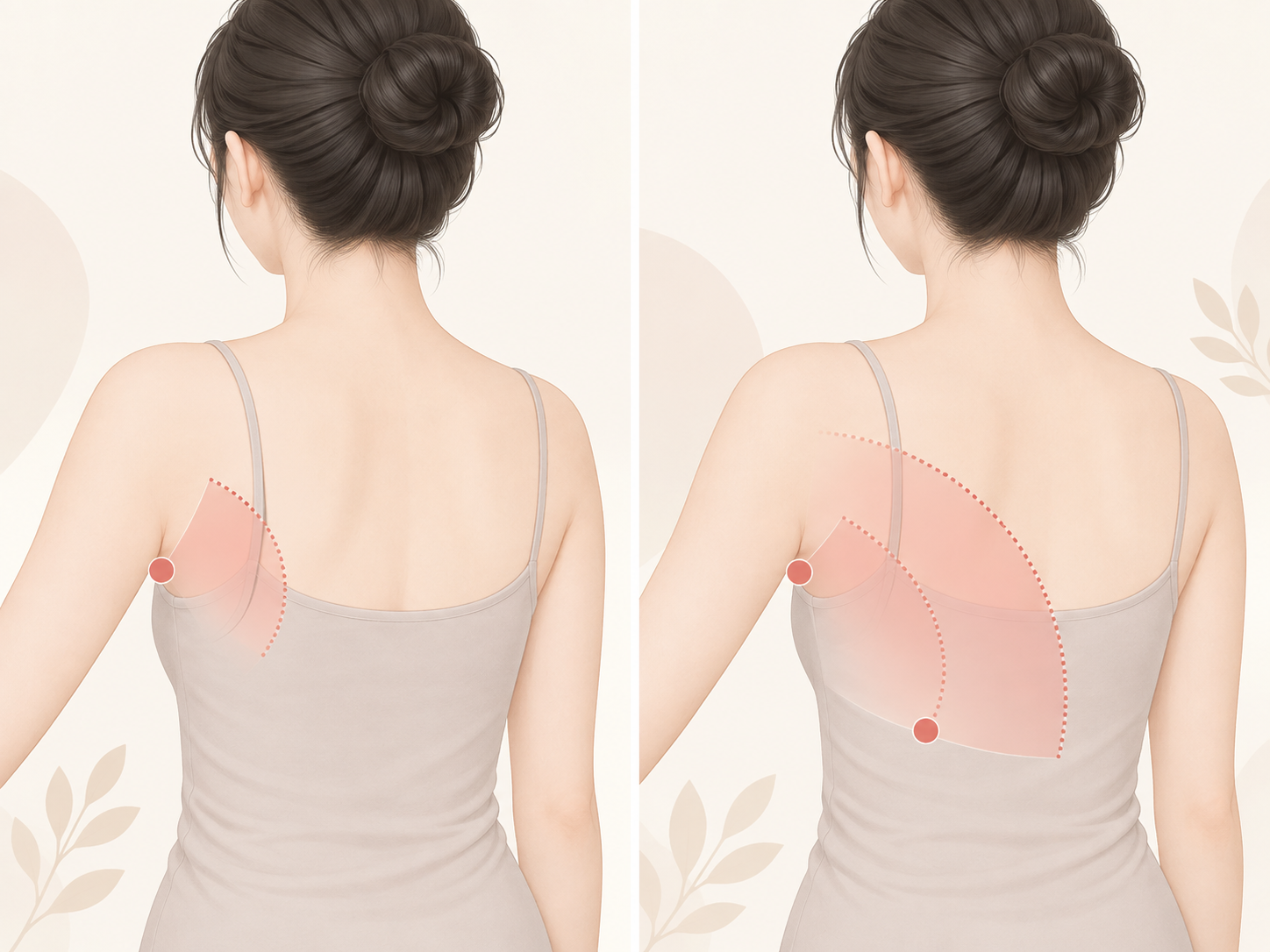
The back of the torso is not a collection of separate parts but a single surface. The back of the arm, the area behind the armpit, the region around the shoulder blades, and the path the bra band takes are all continuous through the fat layer.
By bra line we mean the line across the back where the rear band sits. Where there is thickness there, flesh appears divided above and below the band, and clothing shows that line exactly as it is.
The problem comes when the scope stops at the arm. If the back of the arm thins while the area next to it does not, a border appears between the two zones that was not there before. The treated side recedes, which makes the untreated side stand out by comparison. This is where you get an arm that clearly measures smaller and a back view that looks no different.
Why back fat does not respond well to exercise
Some people go looking for exercises that target the back specifically. The situation is the same as with the arm.
Choosing one area and taking the fat off it is not something exercise can do. The calories a back workout burns come out of body fat as a whole. That said, volume in the lats and the muscles around the shoulder does give the surface something firmer to sit on.
There is one more factor unique to the back: posture. When the shoulders roll forward, the upper back pushes outward into a curve, and the same thickness reads as thicker. How much flesh sits above the bra band also shifts with posture.
So when you photograph your back, it helps to take one shot in your usual posture and one with the shoulders opened. If the two differ noticeably, that difference belongs to posture, not fat. What changes with posture is not a surgical target; the thickness that remains is what actually gets looked at.
Whether the back is included is decided from the back view
Put the photographs in front of you and work through the items below. The more that land on the right, the smoother the result when the back is included.
| Where to look | Arm alone is fine | Include the back |
|---|---|---|
| Back of arm into the back | Carries over smoothly | There is a second thickness partway |
| Behind the armpit | Smooth | A fold pinches when the arm is down |
| Around the shoulder blades | The bone outline is visible | Volume blurs the outline |
| Where the bra band sits | Only a mark is left | Flesh divides above and below |
| In clothes | The back reads clean | The line shows through thin knits |
The third row is easy to miss. The area around the shoulder blades is what carries the surface between arm and back, so volume left there means the overall back view changes little even with a thinner arm. Conversely, once that zone is addressed, the area you occupy from behind shrinks even when the change in arm circumference is modest.
The fourth row can look different depending on the bra rather than your body, so check it in what you normally wear.
If every item falls on the left, there is no reason to bring the back into the scope. When the back surface is clean, the arm alone is enough. Widening is not the default; choosing the stopping point by looking at the back view is the order of operations. How far each zone is taken is set out in arm liposuction scope.
Does including the back mean one more scar?
This question comes up often. The short answer: a wider scope does not mean proportionally more incisions.
The entry point for liposuction is an opening a few millimeters across. A single point reaches a wide area, so the entry at the arm often covers through to behind the armpit. When the scope extends to the bra line or the shoulder blades, however, one more entry point is sometimes needed to get the angle right.
That point is placed along the line the bra band follows or within an armpit crease. It sits where clothing covers it and is not usually noticeable, but we do not tell you the scar will be invisible. How long redness lasts varies from person to person and is usually a matter of months. Figure on six months or more for the mark to settle.
So this is an arithmetic question. Decide in advance which matters more to you: what you gain in the back view, or one additional entry point. How scars fade and how to care for them is covered in minimizing liposuction scars.
What changes in recovery
A wider scope pushes the recovery stages later. Swelling takes longer to come down, and the period you need to keep compression on extends with it.
The back also has more surface in contact with the compression garment, so summer feels considerably stuffier. The wearing burden differs from the arm alone, so it is better to set the timing with the season and your schedule in view.
Positional restrictions differ a little too. If the back was treated, there is now a place that presses when you lie down, so you will spend the first few days shifting position. Expect a few more days of discomfort than with the arm alone. Many people find lying on their side considerably easier.
The order in which change becomes visible is also different from the arm. With the arm you feel it first in how sleeves fit; with the back, the line that used to show through clothing disappears first. Seeing the surface read as even in a back photograph comes later than that, usually after two months.
Even under the same conditions, recovery speed varies. Fat layer thickness, skin elasticity, and the area treated all differ, so two people who had the same scope on the same day do not progress side by side. That is why we prefer to set out what is common at each stage rather than promise a number of weeks.
Start by photographing your back
In order, then.
Before anything else, take the back photographs. Arms down and slightly away, camera at your own height. Work through the five items above with that photograph and you will have a rough answer on whether the arm alone will do or the back needs including.
The rest is confirmed in consultation. Hands tell you about thickness; how many millimeters the fat layer actually measures, and whether what remains around the shoulder blades is fat or something else, only becomes visible once ultrasound separates the layers.
Deciding first whether your goal is the arm from the front or the silhouette of your upper body from behind makes the conversation about scope go much faster. Trying to solve both goals with one plan sometimes ends with neither being satisfying.
The back is the hardest area to judge on your own, simply because you cannot see it. That is why a consultation at Line Culture Clinic photographs the arm lowered and raised, from the front and from behind, and measures the back of the arm, the armpit, and the shoulder blade area separately with ultrasound. Bring a photograph of your back and the question of which zones matter narrows on the spot. You are welcome to get in touch.